简体中文
简体中文 English

Products
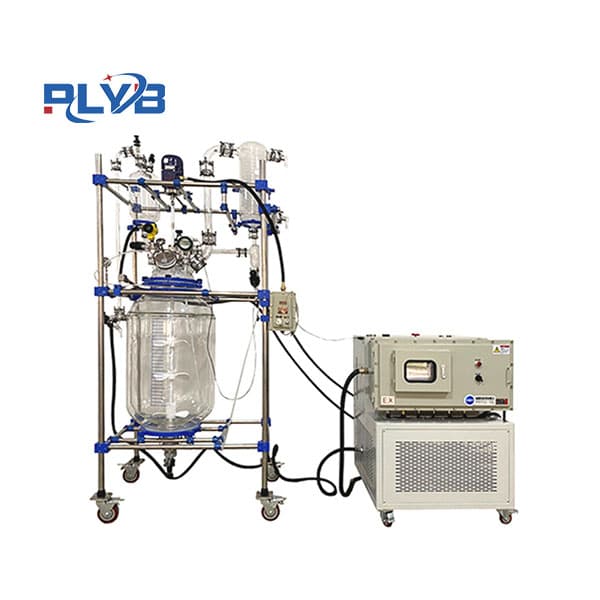
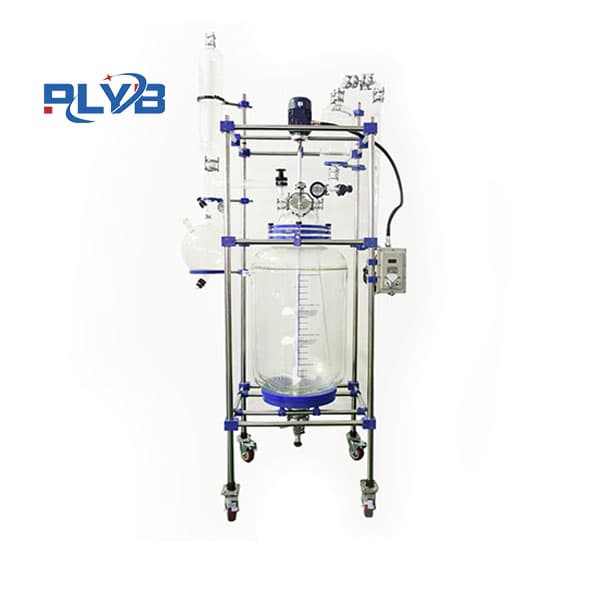
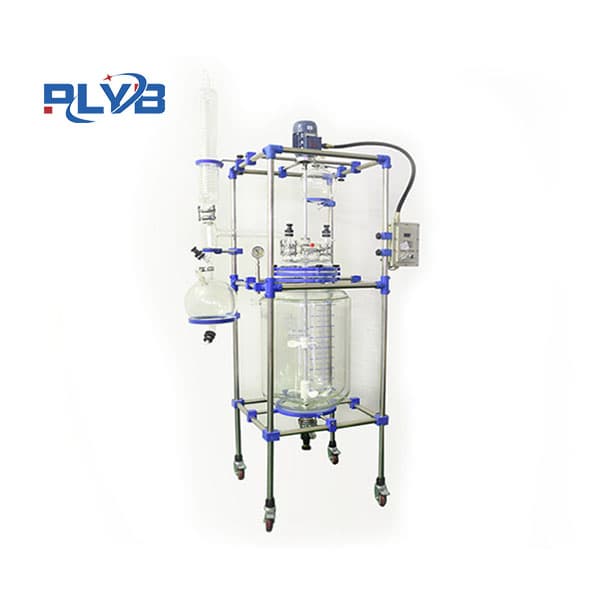
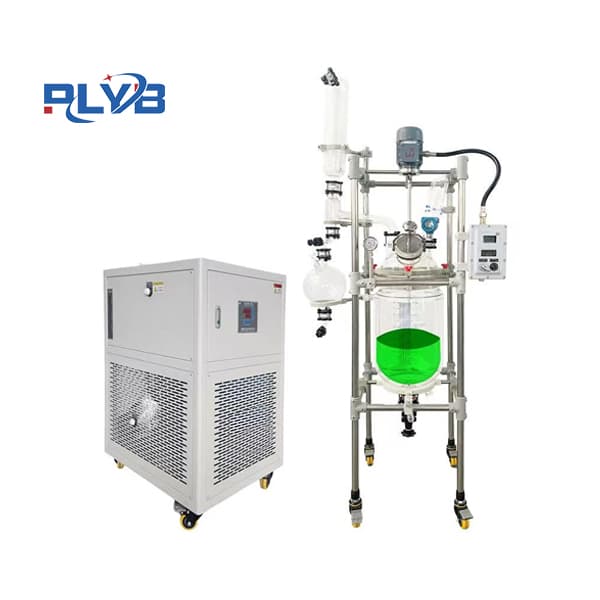
PL-150L Double-Jacketed Glass Reactor
- Product Description
-
PL-150L Double-Jacketed Glass Reactor: The Ideal Choice for Pilot-Scale Production
In the fields of fine chemicals, biopharmaceuticals, and new material synthesis, pilot-scale scale-up is a critical link connecting laboratory R&D with industrial production. The 150L double-jacketed glass reactor, with its moderate capacity and excellent performance, has become an ideal device for pilot-scale production. This article will provide a comprehensive overview of the 150L double-jacketed glass reactor’s product features, technical specifications, application areas, and key points for operation and maintenance.
I. Product Overview and Operating Principle
The 150L double-jacketed glass reactor is a commonly used biochemical instrument that can perform processes such as concentration, distillation, reflux, separation, and purification under constant speed, constant force, and constant temperature conditions, making it an ideal piece of equipment for teaching, experimentation, pilot-scale testing, and production.
This equipment features a double‑walled glass design: the inner layer houses the reaction materials and facilitates stirring, while the jacket is used to circulate a heat-transfer medium. Its operating principle is as follows: a constant‑temperature (hot or cold) heat transfer fluid or coolant is introduced into the jacket of the double‑walled reactor, enabling precise temperature control—either heating or cooling—of the contents inside. Simultaneously, the stirring system ensures thorough mixing and promotes efficient reaction. The reaction proceeds within the vessel, with evaporation and reflux of the reaction mixture carefully regulated. Upon completion, the product can be discharged through the outlet at the bottom of the reactor, making operation exceptionally convenient.
A 150L double‑walled glass reactor typically requires integration with a circulating water vacuum pump, a diaphragm vacuum pump, a low‑temperature circulating pump、a high‑temperature constant‑temperature circulator, and an integrated high/low temperature unit to form a complete system. The jacket of the reactor vessel must be connected to an external heating or cooling circulation system; while stirring the material, a circulating hot solution or coolant is introduced into the jacket to maintain constant‑temperature heating or cooling of the contents inside the reactor.
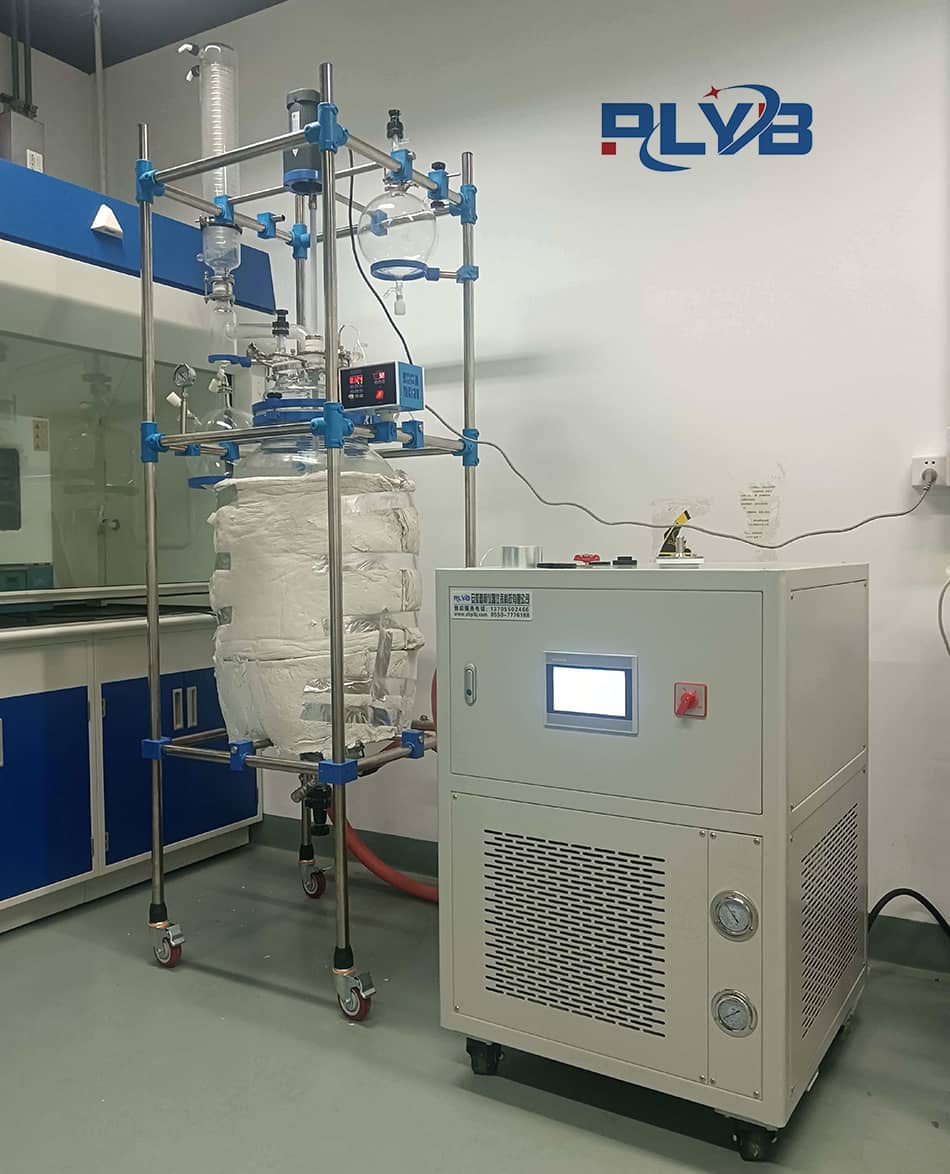
The coordinated operation of the double-layer glass reactor and the high-low temperature integrated unit
The 150L double-layer glass reactor and the high-low temperature integrated unit work in tandem to form a complete closed-loop temperature control system. Its operating principle is as follows:The high-low temperature integrated unit heats or cools the heat-transfer medium to the set temperature, then uses a circulation pump to deliver the medium into the reactor jacket. Inside the jacket, the medium exchanges heat with the materials in the reactor before returning to the integrated unit for further temperature regulation. This cycle repeats continuously, maintaining a constant reaction temperature.
The advantages of this combination are multifaceted: First, its broad temperature‑range capability enables a single system to handle both high‑temperature syntheses—such as esterification reactions, which typically require 150–200°C—and low‑temperature crystallizations—for example, pharmaceutical purification, which may demand temperatures between −20°C and −40°C. Second, its precise temperature control ensures the stability and reproducibility of reaction processes, which are critical for process validation during pilot‑scale scale‑up. Furthermore, the closed-loop system minimizes heat‑transfer fluid loss and environmental contamination, while also reducing operator workload.
II. Core Technical Features
1. High-Quality Glass Material
The reactor vessel is made of high-borosilicate glass (GG17 material, with a thermal expansion coefficient of 3.3), offering excellent physicochemical properties. This material provides a transparent vessel, allowing direct observation of changes in the reaction mixture and enabling operators to monitor the reaction process in real time. The vessel can withstand temperatures ranging from -80°C to +250°C, meeting the temperature requirements of most reaction processes.
2. Robust Frame Structure
The entire machine features a stainless steel frame, with joints elegantly connected via tees and crosses, ensuring a compact, robust structure that maintains its shape. The base is equipped with swivel casters fitted with brakes, allowing the unit to be moved as a whole for convenient operation. The main frame is constructed from SU304 stainless steel, offering excellent corrosion resistance.
3. Efficient Mixing System
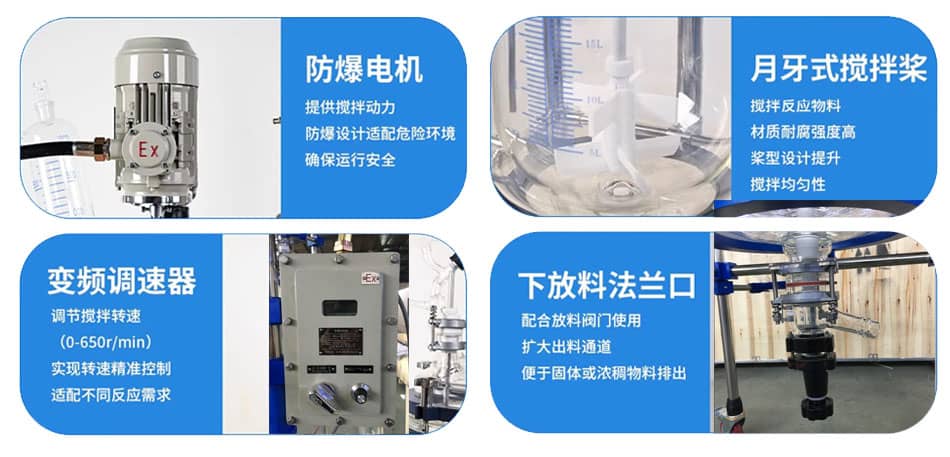
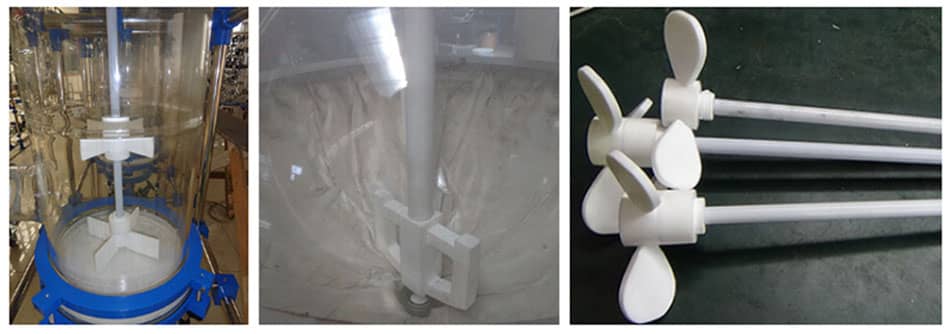
The stirring system employs ceramic bearings and mechanical seals, effectively preventing wear and particle shedding from the stirring shaft while delivering superior high-temperature and wear resistance with excellent sealing performance. The stirring motor typically ranges from 370W to 750W, utilizing variable-frequency drive control, with a speed adjustment range of 50–600 rpm/min or 50–780 rpm. The impeller design is either crescent-shaped or three‑layered, featuring a 304 stainless steel core coated with polytetrafluoroethylene, providing high strength and outstanding corrosion resistance.
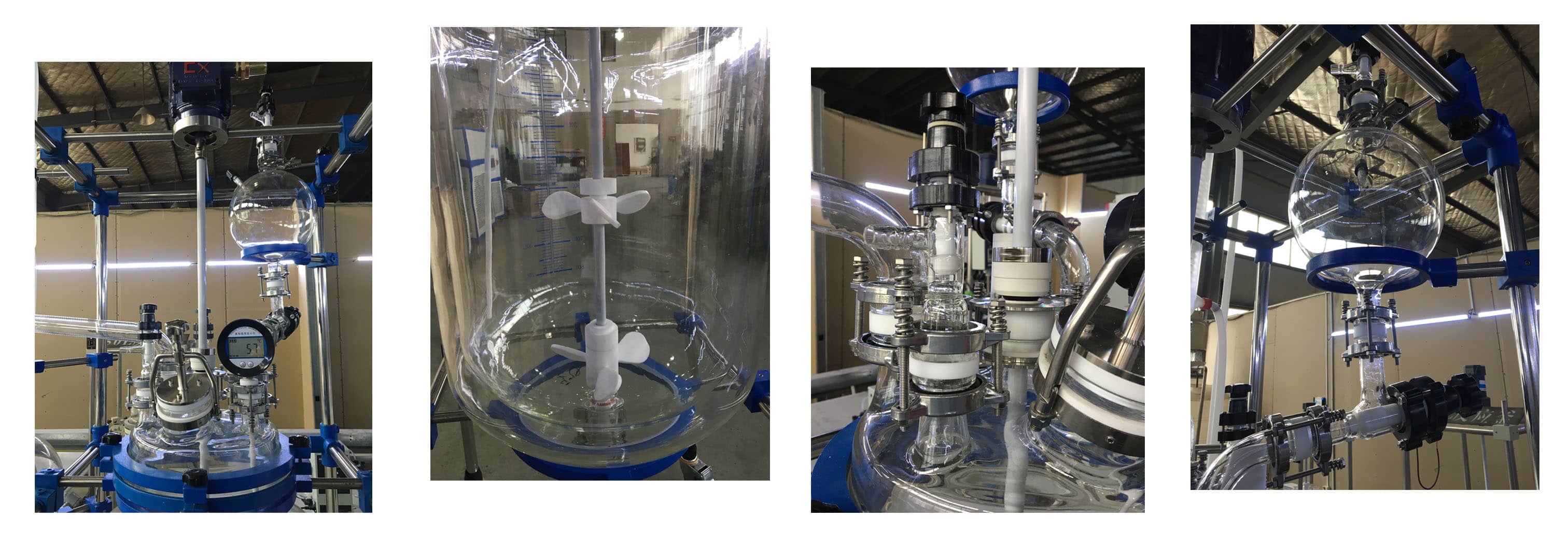
4. The kettle lid features a six-port design
Agitation port: 60# flange, used for mounting the agitator
Solid feed port: 95# flange, convenient for direct addition of solid materials
Constant-pressure funnel port: 40# ground joint, used for dropwise addition of liquid materials
Condenser connection port: 50# ball joint, for connecting the condensation apparatus
Temperature measurement port: 29# or 45mm flange, for installing a PT100 temperature sensor
Vent port: 34# standard port, used for vacuum or venting operations
5. Excellent sealing performance
The stirring system employs mechanical PTFE‑sealed components and ceramic bearings, ensuring excellent airtightness with no air leakage and outstanding chemical resistance. The vacuum level can reach 0.098 MPa, meeting the requirements of most negative‑pressure reaction processes.
6. Convenient discharge design
It features a side‑discharge valve with no liquid accumulation, made of glass and PTFE, enabling quick and thorough draining without dead corners.
Parameter Table for the 150L Double-Layer Glass Reactor
Product Model
Product Model
PL-50L
PL-100L
PL-150L
PL-200L
Reactor Capacity (L)
Volume(L)
50
100
150
200
Number of Vessel Ports
Neck No. on Cover
6
6
6
6
Inner Cylinder Outer Diameter
External Diameter of Inner Vessel(mm)
365
460
550
600
Outer Cylinder Outer Diameter
External Diameter of Outer Vessel(mm)
410
500
600
650
釜盖直径
CoverDiameter(mm)
265
340
340
340
釜体长度
Vessel Height(mm)
850
950
980
1200
电机功率
Motor Power(W)
180
370
750
750
真空度
Vacuum Degree(Mpa)
0.098
0.098
0.098
0.098
转速
Rotation Speed(rpm)
50-600
50-600
50-600
50-600
Torque
Torque(Nm)
2.86
5.89
11.90
11.90
Power Supply
Power (V)
220
220
220
220
Overall Dimensions
Dimension(mm)
700*500*2300
1000*700*2700
1200*900*3000
1200*900*3200
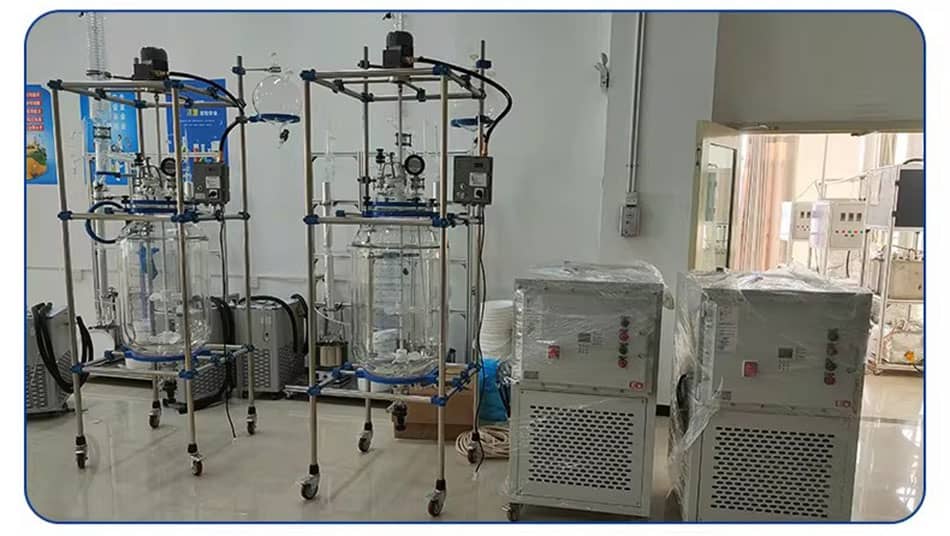
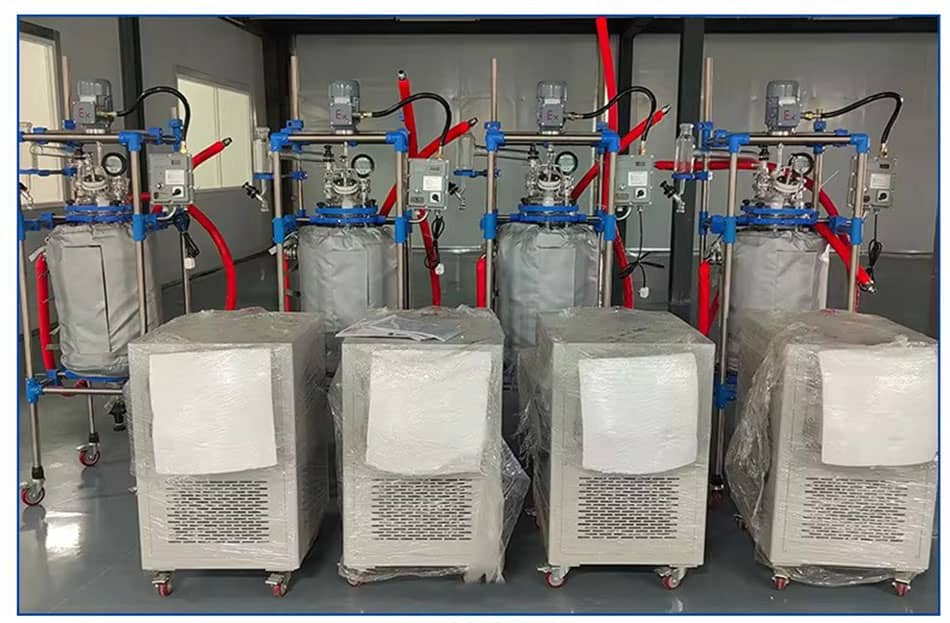
Real-life photos of a double-layer glass reactor
Combined Use of a 150L Double-Layer Glass Reactor, a High/Low Temperature Integrated Unit, and a Low-Temperature Circulator
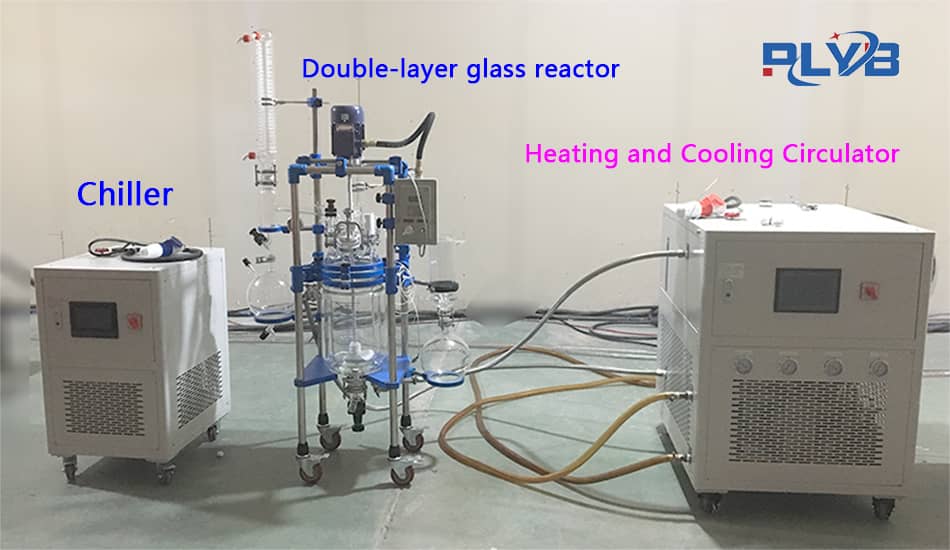
The combination of a 150L double‑walled glass reactor and an integrated high‑low temperature unit represents the cutting edge of pilot‑scale temperature control systems. This golden pairing not only delivers precise temperature regulation across an extensive range—from −80°C to 300°C—but also offers intuitive real-time monitoring of the reaction process thanks to its transparent vessel, providing reliable data to support scale‑up. In applications spanning pharmaceuticals, fine chemicals, and new materials, this system is helping an increasing number of R&D teams bridge the gap between laboratory research and industrial production, making it an indispensable core piece of equipment for the pilot‑scale phase.
As pharmaceutical R&D and the new chemical materials industry continue to develop, the demand for pilot-scale equipment will become increasingly persified and specialized. Choosing a reliable, well‑equipped 150L double‑jacketed glass reactor paired with an integrated high‑and‑low temperature system is undoubtedly laying a solid foundation for pilot production.
Related Products
Product Inquiry
Please leave your information, and we will contact you as soon as possible after receiving it. Thank you for your support!