简体中文
简体中文 English

Products
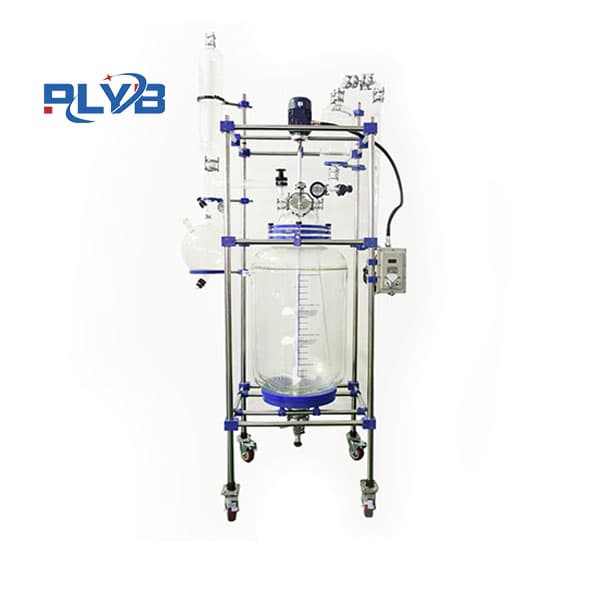
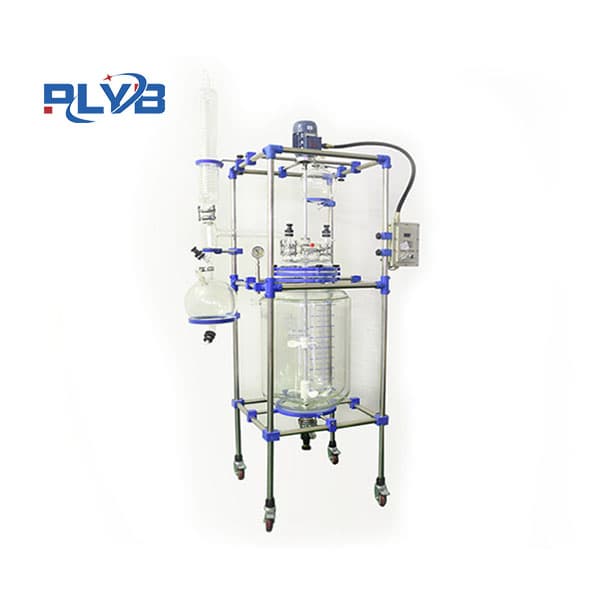
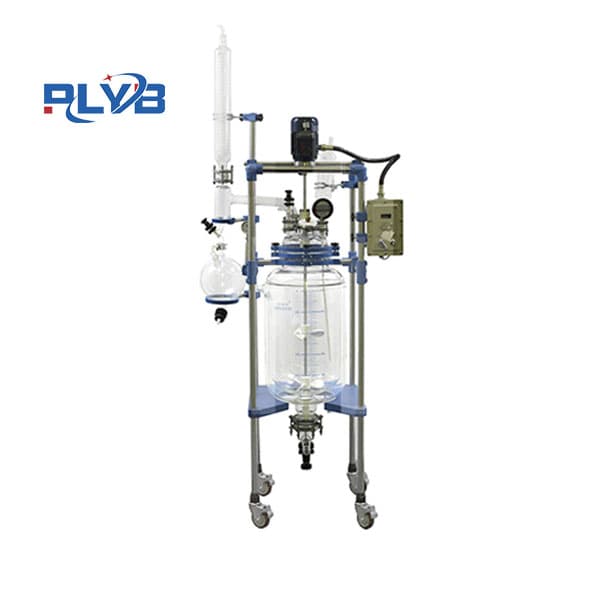
PL-100L Double-Jacketed Glass Reactor
- Product Description
-
Introduction to the PL-100L Double-Jacketed Glass Reactor
100L double-layer glass reactor is a widely used piece of equipment for pilot-scale operations and small-batch production in fine chemicals, biopharmaceuticals, and new materials synthesis. It features a double-layer glass design: the inner layer holds the reaction materials, while the jacket can be filled with heating or cooling media to achieve precise temperature control during the reaction process.
The core advantages of this equipment are: fully transparent visualization of the reaction process, enabling easy observation of material color changes, crystallization states, and layering; excellent corrosion resistance—parts in contact with materials are made of high-borosilicate glass and polytetrafluoroethylene (PTFE), allowing it to withstand most chemical solvents except hydrofluoric acid and strong alkalis; and a wide operating temperature range, capable of maintaining constant-temperature reactions from -80°C to 250°C
When the vessel capacity reaches 100 L, the typical batch charge is 50–80 kg, sufficient to support commercial‑scale order fulfillment. At this point, the equipment’s operating logic shifts from “exploring optimal process parameters” to “stably running at those optimal parameters.” Consequently, user priorities also change: the focus is no longer on “whether a particular reaction can be achieved,” but rather on “whether the same yield and purity can be maintained across ten consecutive batches,” “whether stable vacuum levels can be sustained during 48 hours of continuous operation,” and “whether production can be rapidly resumed after an emergency shutdown.”
Key features and performance of the 100L double-jacketed glass reactor
1. Large-capacity design, suitable for pilot-scale scale-up
100L capacity meets the transition needs from laboratory R&D to industrial-scale production, offering high unit productivity and serving as a core piece of equipment for process validation and small-scale manufacturing.
2. Precise temperature control over a wide range
The jacket can be connected to cryogenic refrigerant or high-temperature heat-transfer oil, enabling precise temperature control from -80℃ to 250℃ (with some custom models reaching up to 300℃), supporting various operating conditions such as low-temperature reactions, room-temperature syntheses, and high-temperature distillations.
3. High chemical stability materials
The inner layer is made of GG-17 high-borosilicate glass (coefficient 3.3), resistant to strong acids, strong bases, and organic solvents, and transparent for easy real-time observation of the reaction process.
4. Efficient Agitation and Sealing System
Equipped with an inverter‑controlled motor, offering a speed range of 50–600 rpm (up to 1500 rpm for certain models), it features brushless operation with no sparking, ensuring stable and safe performance.
Adopts a PTFE component plus mechanical seal design, achieving a vacuum level of ≤0.098 MPa, thereby guaranteeing reliable sealing under negative pressure conditions.
5. Multi‑Functional Reaction Compatibility
Supports operations such as atmospheric/pressure‑reduced stirring, reflux, distillation, concentration, and extraction; the multi‑port reactor lid can be fitted with drop funnels, condensers, temperature sensors, and other accessories, allowing flexible configuration of the reaction system.
6. A 100L high-borosilicate glass reactor vessel is not simply a scaled-up version of a 30L reactor. In the manufacture of large glass vessels, wall thickness distribution, annealing processes, and flange connection methods all require redesign. High-quality 100L equipment employs a segmented thickening structure: the middle section of the vessel experiences the highest static pressure, so its wall thickness is correspondingly increased; while the upper portion bears less pressure, allowing for a slight reduction in wall thickness to reduce overall weight. The flange connection surface utilizes a dual safeguard—wide‑flange planar sealing combined with a locating ring—ensuring reliable sealing while facilitating routine disassembly and maintenance.
Thermal Management: From Precise Temperature Control to Thermal Inertia Compensation
As the reactor volume increases, thermal inertia—the ability of the vessel and its contents to store heat—significantly intensifies. This characteristic is particularly pronounced in 100 L equipment, presenting both a challenge and an opportunity.
The challenge is that thermal inertia causes a delay in the temperature response. Once the PLC system detects a deviation from the setpoint and issues a heating or cooling command, the actual temperature inside the vessel often lags by tens of seconds or even several minutes. If the same PID control parameters used for smaller-scale equipment are applied, overshoot or oscillations are highly likely to occur.
The solution is to introduce a thermal inertia compensation algorithm. The control system of a high-quality 100L reactor can dynamically predict temperature trends based on multiple parameters, including the current vessel temperature, jacket medium temperature, and the specific heat capacity of the process material, thereby adjusting heating or cooling power in advance to achieve proactive temperature control. This technology keeps temperature fluctuations within ±0.5℃, meeting the stringent temperature-control requirements of high-precision reactions.
The opportunity lies in the fact that a larger thermal capacity gives 100‑L equipment a distinct advantage in cryogenic reactions. When a reaction requires prolonged maintenance within the low‑temperature range of −60°C to −80°C, the thermal inertia of large‑scale equipment can effectively buffer against fluctuations in ambient temperature, ensuring long‑term stability of the reactor’s internal temperature—something small‑scale units struggle to achieve.
Temperature Differential Control: For a 100 L glass reactor, the large volume of material inside results in significant thermal inertia. It is recommended not to set an excessively large temperature difference between the target and actual temperatures. For example, if the material is at 20°C, do not set the target directly to 150°C. Instead, adopt a staged heating approach (e.g., 50°C → 100°C → 150°C) to prevent excessive temperature differentials between the jacket and the reactor contents, which could cause the glass vessel to shatter due to thermal stress—a major safety hazard under high–low temperature cycling.
The 100L double‑walled glass reactor is fully equipped with an automated PLC control system. Key operational parameters—including jacket medium switching, feed rate control, and vacuum level adjustment—are all managed and executed automatically via programmed controls. The control system also features batch management capabilities, enabling it to record critical process parameter curves for each batch and generate traceable production data archives. This provides irreplaceable value in meeting the requirements of quality management systems such as GMP, supporting customer audits, and facilitating quality traceability.
Applications and Classification of Double-Jacketed Glass Reactors
1. Industry Applications
Pharmaceutical industry: Used for API synthesis, preparation of pharmaceutical intermediates, crystallization and purification, etc. Its transparent vessel allows easy observation of the entire reaction process, and equipment compliant with GMP standards also supports aseptic processes and in-line cleaning, which are critical for traceability and cleanliness in drug production.
Fine Chemicals and Organic Synthesis: Core applications include esterification, nitration, polymerization reactions, as well as catalyst development and product distillation/purification. The equipment’s excellent corrosion resistance and wide temperature control range (-80℃~250℃) can meet the demands of various demanding reaction processes.
New Materials R&D and Production: Widely used for formulation exploration and small-batch pilot production of cutting-edge materials such as polymeric polymers, nanomaterials, and lithium-ion battery electrolytes; precise temperature control and stirring are critical to ensuring stable material performance.
Biopharmaceuticals and Food: Involved in extracting plant-derived active ingredients and concentrating/purifying food additives (flavorings, colorants), among other processes. Its glass construction is highly inert and does not contaminate the materials, making it ideally suited for these hygiene-sensitive applications.
Universities and research institutes: As core teaching and research equipment, they are used to demonstrate chemical reaction principles and verify process feasibility; their modular design facilitates the assembly of various experimental setups such as distillation and reflux.
2. Classification by Capacity and Specifications
Small Capacity: 1L double-jacketed glass reactor, 5L double-jacketed glass reactor, 10L double-jacketed glass reactor
Pilot/Production: 20L double-jacketed glass reactor, 50L double-jacketed glass reactor, 100L double-jacketed glass reactor, 150L double-jacketed glass reactor, 200L double-jacketed glass reactor
Special Specifications: Explosion-proof double-jacketed glass reactor, lift-and-tilt reactor, vacuum double-jacketed glass reactor, PLC-controlled glass reactor
Specification Table for Double-Jacketed Glass Reactors
Product Model
PL-50L
PL-80L
PL-100L
Reactor Capacity (L)
Volume(L)
50
80
100
Number of Vessel Ports
Neck No. on Cover
6
6
6
Inner Cylinder Outer Diameter
External Diameter of Inner Vessel(mm)
365
410
460
Outer Cylinder Outer Diameter
External Diameter of Outer Vessel(mm)
410
460
500
CoverDiameter(mm)
265
340
340
Vessel Height(mm)
850
950
950
Motor Power(W)
180
370
370
Vacuum Degree(Mpa)
0.098
0.098
0.098
Rotation Speed(rpm)
50-600
50-600
50-600
Torque(Nm)
2.86
5.89
5.89
Power Supply
Power (V)
220
220
220
Overall Dimensions
Dimension(mm)
700*500*2300
1000*700*2500
1000*700*2700
Detail images of each component of the double-jacketed glass reactor
A complete 100L double-jacketed glass reactor is primarily composed of the following components:
Reactor vessel assembly: Effective volume 100 L, manufactured from GG17 high-borosilicate glass with a wall thickness of 5–7 mm, offering excellent chemical stability and resistance to thermal shock. The jacket has a volume of approximately 30 L, used for circulating heating or cooling media.
Reactor lid and ports: Typically equipped with a five- or six-port lid, including a stirring port (60# flange), a condenser reflux port (50# ground glass joint), a constant-pressure dropping funnel port (24# ground glass joint), a temperature-sensing port (29# ground glass joint), a solid feed port (95# flange), and a vacuum/venting port (34# ground glass joint).
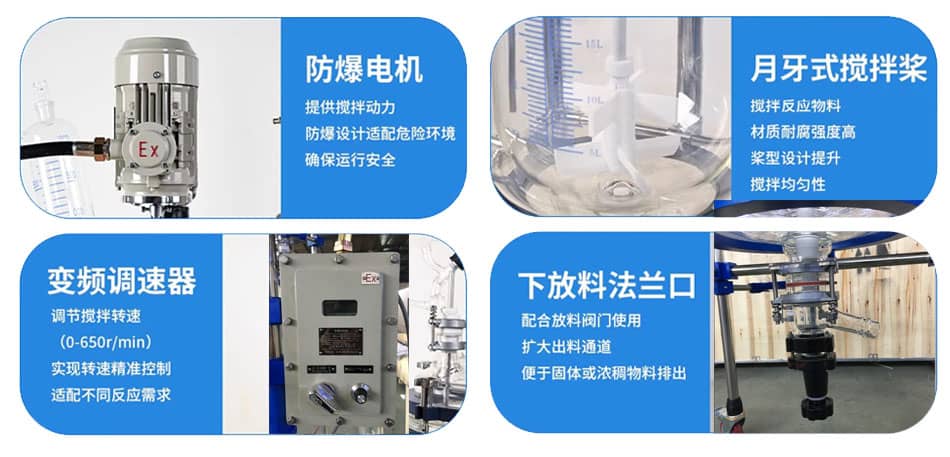
Agitation System: Equipped with a 370W standard motor or an explosion-proof motor, with an adjustable speed range of 50–600 rpm. The stirring rod features a 316L stainless steel core coated with polytetrafluoroethylene, offering excellent corrosion resistance. Stirring impeller types—propeller, anchor, or paddle—can be selected based on the material’s viscosity.
Sealing System: Utilizes a PTFE‑based mechanical seal paired with ceramic bearings, ensuring a vacuum level of –0.096 MPa to –0.098 MPa and providing stable, reliable sealing performance.
Condensation and Reflux System: Equipped with a vertical or serpentine condenser, offering a heat exchange area of approximately 0.7 m², used for condensing and recovering solvent vapors during distillation.
Frame and Mobility System: The main body features a 304 stainless steel frame, with casters fitted at the base that include brakes, facilitating easy movement and positioning of the entire unit.
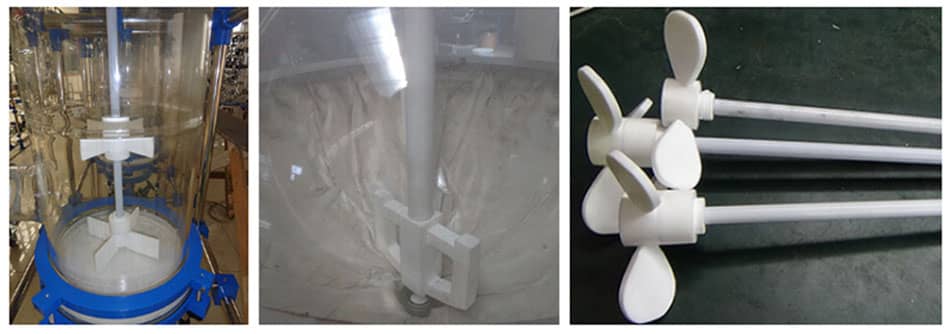
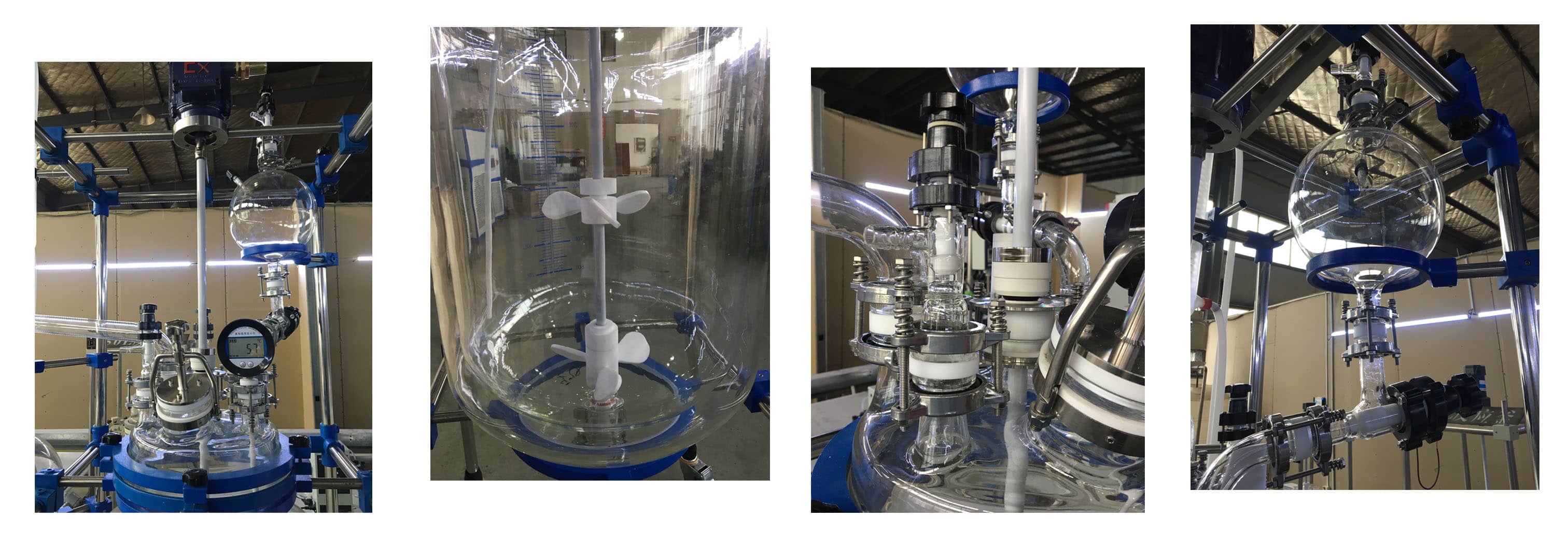
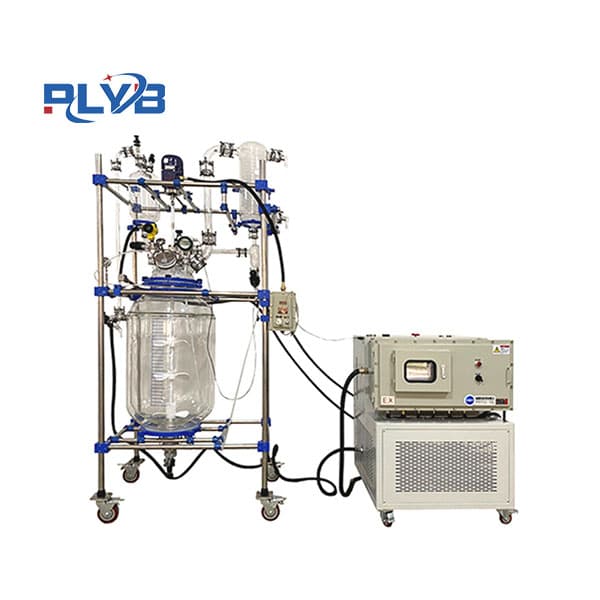
Real-life photos of a double-layer glass reactor
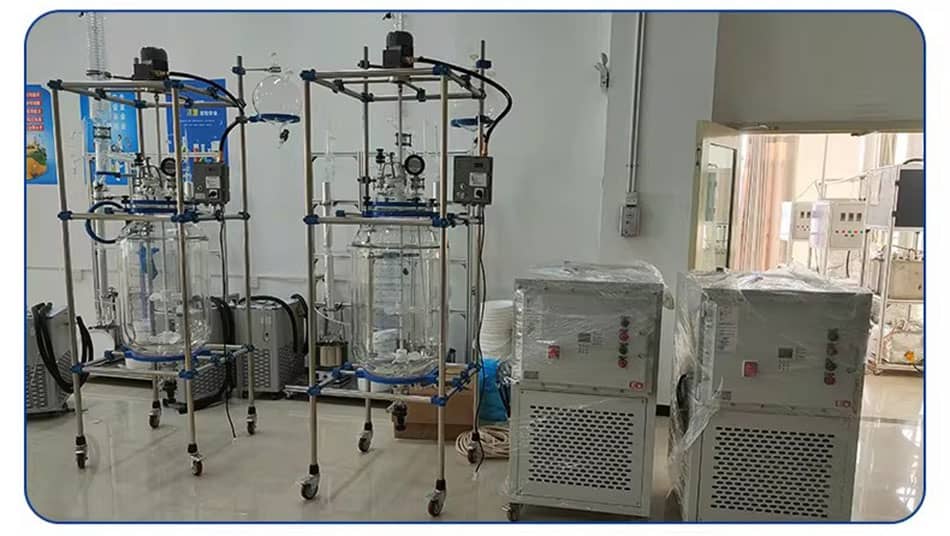
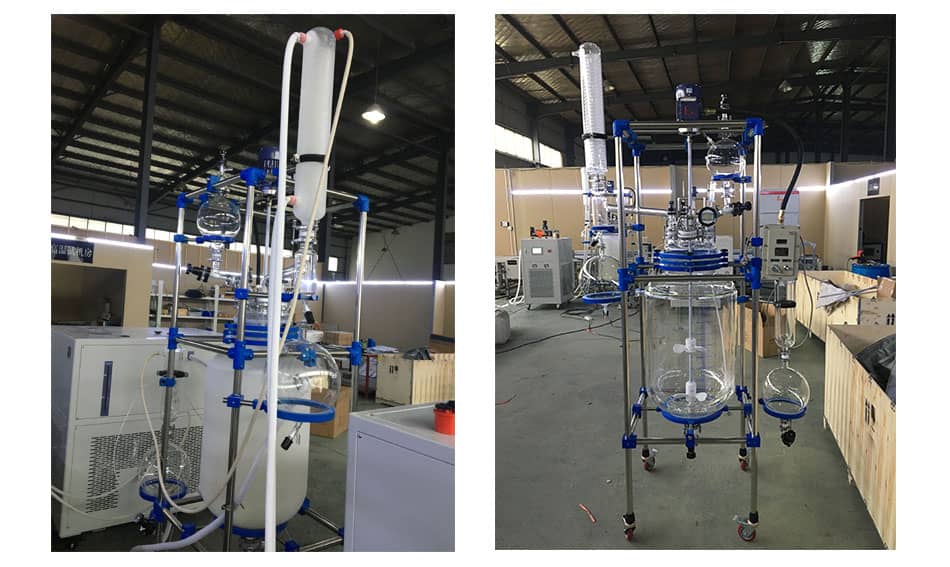
100L double-layer glass reactor, 100L high-low temperature integrated unit and low-temperature circulator for combined use
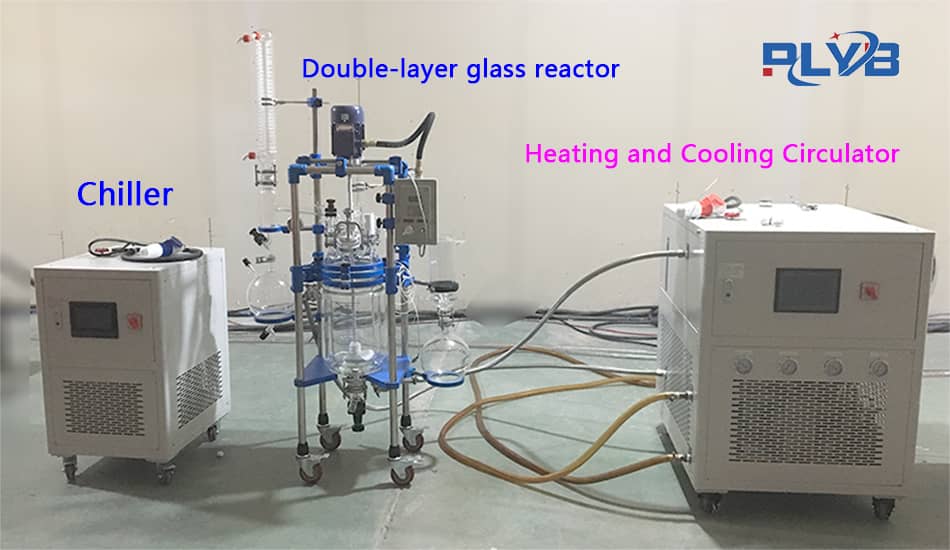
The high‑low temperature unit shown in the image can supply heat to a double‑walled glass reactor, causing the medium in the reactor to evaporate upon heating and enter a serpentine condenser. A low‑temperature circulator cools the condenser; when the hot vapor contacts the cold condensing tubes, it condenses into tiny droplets that eventually collect in a receiving flask. Some of the liquid is returned to the reactor via a reflux line for repeated evaporation, achieving purification.
Summary
Compared to stainless steel reactor equipment, the easy-clean properties of glass make cleaning validation during product changeovers much simpler; compared to50L double-jacketed glass reactors, a 100L capacity is sufficient to support batch delivery for commercial orders. A well‑configured 100L reactor system can handle alternating production runs of 3–5 different product varieties, achieving dual optimization of equipment utilization and production flexibility.
The 100L double-jacketed glass reactor represents a significant leap in capability: from being able to “produce prototypes” to being able to “deliver products reliably.” Its value lies not only in its larger volume but also in the comprehensive integration of industrial‑grade design principles—redundant sealing ensures continuous operation, torque reserves accommodate process fluctuations, thermal inertia compensation enables precise temperature control, and systematic management guarantees batch-to-batch consistency. For companies transitioning from R&D‑driven operations to industrialization, the 100L double‑jacketed glass reactor is a crucial step in crossing this threshold.
Related Products
Product Inquiry
Please leave your information, and we will contact you as soon as possible after receiving it. Thank you for your support!