简体中文
简体中文 English

Products
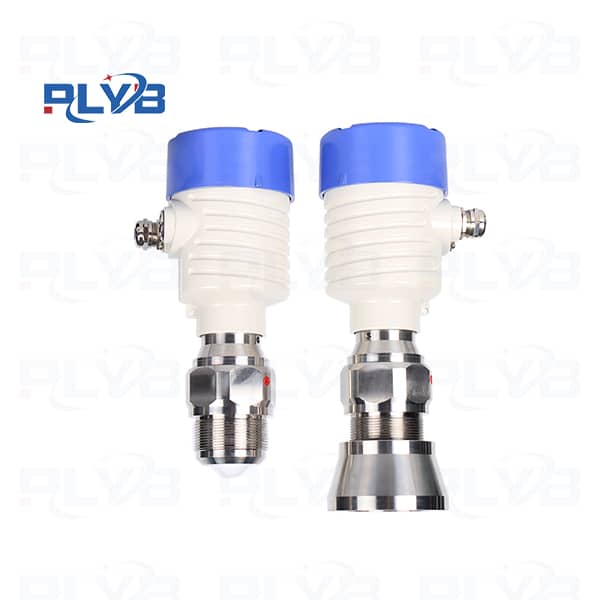
120GHz frequency-modulated continuous wave radar level meter
- Product Description
-
Imagine you are managing a renovation project for a pharmaceutical workshop. The tank diameter is only 1 meter, and the available mounting diameters at the tank top are DN32 and DN40—two sizes so small that they can barely accommodate any standard level gauge. What's even more challenging is that the tank has three layers of stirring blades, and the temperature must be heated to 200°C. The dielectric constant of the benzene medium is very low, and the evaporation process is accompanied by nitrogen purging. Using 26GHz radar, the beam angle is too wide, and as soon as it starts, the stirring paddle blocks the echo; Using guided wave radar still inevitably causes material hanging issues; Using ultrasound, the steam is hard to measure as soon as it comes up.
What solution do you have? This was a real retrofit project, ultimately solved by a 120GHz frequency-modulated continuous wave radar level meter.
What is a 120GHz FMCW radar level gauge?
This is a non-contact level measuring instrument using millimeter-wave radar technology. Unlike traditional pulse radar, it uses the principle of frequency-modulated continuous waves, continuously transmitting high-frequency electromagnetic waves that are linearly scanned at frequencies, then receiving and analyzing the reflected differential frequency signals to deduce distance. This approach fundamentally improves signal energy and signal-to-noise ratio, with anti-interference performance far superior to traditional pulse radar.
What does the 120GHz figure mean? Its wavelength is about 2.5 mm, which is exactly 4 to 5 times shorter than the 26GHz radar (wavelength about 11.5 mm). Physical laws dictate: the shorter the wavelength, the more concentrated the beam, the stronger the ability to recognize tiny targets, and the better the penetration performance of foam and vapor.
Which scenarios require 120GHz?
Not all liquid level measurements require 120GHz. However, in the following scenarios, low-frequency radar often struggles:
Scenario 1: Microcontainers. The measurement range from 100mm to 30,000mm covers all needs from small tanks to large silos. The pharmaceutical and food industries have a large number of small and medium-sized containers with limited space, narrow interfaces, and complex structures. The 120GHz radar beam angle can be narrowed to less than 3°, allowing stable liquid level measurement even in the confined space of the DN32 connector.
Scenario 2: Low dielectric constant media. Organic solvents such as benzene, toluene, pentane, and alcohol have weak reflected signals, and low-frequency radar performs poorly on these media. The 120GHz wavelength is shorter, more sensitive to reflections, and has clearer echoes. In the benzene medium measurement of a certain precision distillation reactor, the 120GHz radar successfully completed on-site modification, with normal, stable, and reliable signal data.
Scenario 3: With stirring and foam. When the stirring blades reach the liquid surface, vortices or even foam layers form. After signal attenuation, low-frequency radar may directly lose signals, but at 120GHz, thanks to its high signal-to-noise ratio, it can still penetrate and lock onto the true liquid surface.
Scenario 4: High temperature with steam. When there is condensate and steam inside the tank, condensation easily forms on the antenna or a thick layer of adhesion. 120GHz millimeter-wave signals can directly penetrate these condensation layers without affecting signal integrity.
Scenario 5: Trade-grade metrology handover. The measurement and accounting of refined product tanks, chemical storage tanks, and distillery aging tanks demands the highest precision. The 120GHz radar achieves measurement accuracy of up to ±1mm and resolution of 0.01mm, sufficient to meet the metrology accuracy required for trade handovers.
Scene Pain points Low-frequency radar performance 120GHz performance Small microcontainers Small installation diameter and limited space The beam angle is large, and the signal is absorbed by the tank wall 3° beam angle, easy installation of DN32 interface Low dielectric constant dielectric (benzene, alcohol) Weak signal reflection Weak echo makes it easy to miss detection Shorter wavelength, sensitive to reflection, and stable capture Stir and foam Liquid level fluctuations and signal attenuation Insufficient signal strength, frequent wave loss High signal-to-noise ratio penetrates foam, locking the real liquid surface High temperatures carry steam Condensation on the antenna is dripping material Signals are significantly attenuated or even interrupted Millimeter waves penetrate condensation, keeping the signal stable From 26GHz to 80GHz and then to 120GHz
The operating frequency of radar level gauges is continuously increasing: 6GHz→26GHz→80GHz→120GHz. Each frequency increase is accompanied by narrowing of the beam angle and improved measurement accuracy.
Let's look at a set of real-world test comparison parameters:
Technical Specifications Traditional 26GHz pulse radar 120GHz FM continuous wave radar Resolution 1–5mm 0.01mm Measurement accuracy ± 5mm or worse ±1mm / ±3mm Beam angle 8°–12° < 1° to 4° Blind spots Usually, ≥ 20cm 10–100mm Anti-condensation capability Significantly affected by condensation Strong penetration, signals can penetrate condensation Low dielectric constant adaptability Lower High sensitivity for better adaptation The narrow beam at 120GHz (minimum <1°) greatly reduces interference signals from obstacles inside the tank. FMCW technology itself has higher anti-interference characteristics—by accumulating the duration of variation, it can effectively filter out various environmental interference signals present on site.
From the data perspective, this is not just an increase in frequency numbers, but a comprehensive leap in measurement reliability and adaptability to operating conditions.
Core parameters overview
Parameter items Typical specifications Operating frequency 120GHz / 122GHz FM bandwidth 6–10GHz (dynamic frequency modulation) Measurement range 0.1m–200m (model available) Resolution 0.01mm (50m range) Measurement accuracy ±1mm / ±3mm / ±5mm Beam angle < 1° to 4° Blind spots 10–100mm (some models have zero blind spots) Process temperature -40°C–200°C (high-temperature models can reach up to 600°C) Process pressure -1MPa–32MPa Protection rating IP67–IP68 Supply voltage DC 8–35V / AC 220V (optional) Signal output 4–20mA + HART / RS485 Modbus On-site operation OLED/LCD touchscreen / Bluetooth / button panel Process connection Threaded or flanged Antenna type Hemispherical lens antenna / PTFE/PFA/PEEK Explosion-proof rating Ex ia IIC T6 Ga / Ex d IIC T6 Parameters vary depending on the specific model and manufacturer configuration; this table represents the typical technical specifications of the mainstream 120GHz level gauges in the industry.
Why is the beam angle so important?
The beam angle determines the degree to which radar electromagnetic waves diverge outward and is a key geometric parameter affecting measurement accuracy.
Suppose your tank has a diameter of 4 meters and a 300mm diameter stirring shaft in the middle of the tank is stirring. A 26GHz radar with an 8° beam angle, at 5 meters above the surface, has a spot diameter of about 0.7 meters from the surface where the beam is projected. Once the stirring paddle is swept by the beam, the echo directly drowns out the liquid surface signal. A 120GHz radar with a beam angle < 1° projects a spot less than 0.09 meters at the same distance—less than a fist. The beam easily bypasses the side of the stirring paddle, precisely locking the liquid level, with almost no interference signals.
In short: the smaller the beam angle, the more accurately the antenna "aims," making it easier to avoid obstacles.
Technology and application extension
Contactless—Say goodbye to maintenance hassles completely
Non-contact measurement means no mechanical moving parts, no contact with the medium, and basically no maintenance. For high-risk media (corrosive, toxic, high temperatures), this itself serves as a safety guarantee.
Penetrating obstacles—a completely new form of contactless operation
A unique advantage of 120GHz high-frequency electromagnetic waves is their ability to penetrate certain solid materials—including quartz glass, PTFE, PFA, PEEK, and others. This means radar can be completely sealed behind windows or blind panels made of these materials, and signals can be transmitted for measurement, achieving thorough physical isolation from high-temperature, high-pressure, toxic, and corrosive conditions—a truly higher-level form of non-contact safety.
Universal adjustment—handles unconventional installation angles
Many hoppers have tank tops that are not flat, or the antenna needs to avoid the feed inlet. The 120GHz radar is optionally equipped with universal adjustment flanges, supporting antenna tilt adjustment to fit conical bottom tanks or curved tank tops, ensuring the beam is always vertically directed at the material surface.
Hygienic design
The pharmaceutical and food industries have strict regulations on equipment surface finish. The 120GHz radar's lens antenna is made of perfluoroplastic, with a smooth surface without grooves or dead corners, with no gaps for dirt or dirt. Combined with a 316L stainless steel casing and sanitary-grade process connection, it fully meets FDA and GMP standards.
Explosion-proof—suitable for flammable and explosive environments
There are explosion risks in areas such as refineries, chemical plants, and mines. The 120GHz radar offers an optional intrinsically safe Exia IIC T6 Ga explosion-proof rating, suitable for the highest risk levels of flammable and explosive environments in Zone 0 and Zone 1.
Intelligent debugging methods
Bluetooth debugging: On-site, there is no need to climb the tank top; all parameter configurations and echo curve viewing can be completed via the mobile app in the safe area. Remote network: Supports 4G or IoT remote debugging, allowing technical engineers to calibrate instruments thousands of kilometers away from the office, greatly reducing time costs and extra expenses caused by on-site travel.
Signal access method
Supports 4–20mA analog signal output, can be directly integrated with existing PLC/DCS systems, and enables fully automated control throughout the process. It also supports RS485 + Modbus RTU digital communication, reading real-time liquid level data, instrument self-diagnostic information, echo intensity, and other depth data. Some models can be selected for other industrial bus protocols such as PROFIBUS and IO-Link.
Wide range of application areas
The 120GHz radar level gauge already has a large number of mature application cases in the following industries:
Chemicals and petrochemicals: Reactor level monitoring (highly corrosive, high-temperature), various storage tank levels (benzene, toluene, methanol, ethylene, acid-base, etc.), spherical tanks and high-pressure vessels
Pharmaceuticals: Aseptic reactor liquid level, high-purity drug storage tank liquid level. The hygienic design fully complies with GMP/FDA requirements and has been successfully applied in space-constrained environments for small and medium-sized storage tanks
Food and beverages: fermentation tank levels, sake tank levels, blending tank levels. A dairy company improved post-filling accuracy from ±5mm to ±1mm, reducing raw material waste by over 200 tons annually
Energy and Power: Boiler Drum Water Level Monitoring, Trade-Grade Metering for Crude Oil/Refined Oil Storage Tanks
Metallurgy: High-temperature molten metal storage tanks, ore silos, pulverized coal silos, limestone powder silos, and other high-dust, high-temperature working conditions
Environmental protection and water treatment: liquid level and sludge interface measurement in aeration tanks of wastewater treatment plants, monitoring of chemical acid-base neutralization tanks
Cement and building materials: Measurement of material levels in high dust and large material surface environments such as cement finished product silos, raw material silos, clinker silos, and pulverized coal silos
A few tips for model selectors
First, let's calculate the beam angle effect. Based on the actual tank height and internal structural dimensions, calculate whether the antenna's light spot coverage at the material surface will encounter obstacles. This is the first step in determining whether a radar can operate normally.
Second, check the dielectric constant. Almost all radars require a dielectric constant ≥ 1.4–1.8 to achieve effective reflection. The lower the dielectric constant, the higher the echo intensity required, requiring radar with a narrower beam angle to focus energy, and if necessary, adding waveguides or bypass tubes to enhance the signal.
Third, pay attention to the antenna material. 120GHz radar antennas come in various materials: PTFE offers the best cost-performance ratio and outstanding corrosion resistance; PFA has slightly better high-temperature resistance than PTFE and is equally corrosion-resistant; PEEK, on the other hand, offers higher mechanical strength and high-temperature resistance, making it suitable for more demanding high-temperature and high-pressure operating conditions.
Fourth, confirm the installation interface. The lens antenna 120GHz radar is very compact, and even the threaded interfaces of DN32 or DN40 can be installed smoothly. However, since the specific interface sizes differ for each model, it is still necessary to verify whether the flange size ≥ DN50 or suitable thread specifications when selecting the model.
Fifth, matching explosion-proof ratings. Flammable and explosive areas must use explosion-proof certified models, and ensure that the explosion-proof rating (such as Exia IIC T6 Ga) matches the on-site explosion-proof zoning requirements. Typically, gas environments require at least Ex ia or Ex d levels.
Core differences compared to traditional technologies
Compared to traditional 26GHz pulse radar or ultrasonic level meters, 120GHz FMCW radar offers the following significant advantages:
The beam angle is narrower (< 1° to 4°), avoiding interference from obstacles inside the tank
Shorter operating wavelength (~2.5mm), more sensitive to reflections from small particles and low dielectric constants
It has stronger penetration and can penetrate foam, mist, condensation, and adherent substances on the antenna surface
Higher resolution and accuracy, reaching 0.01mm resolution / ±1mm accuracy
It can penetrate materials such as quartz glass, PTFE, PPA, PEEK, and more, enabling truly non-contact measurement under physical isolation
Highly adaptable for installation, accommodating small-diameter interfaces and confined spaces
FMCW technology is stronger and more stable than pulse radar
These differentiated capabilities make 120GHz radar irreplaceable under complex conditions in industries such as chemicals, pharmaceuticals, petrochemicals, and food and beverage.
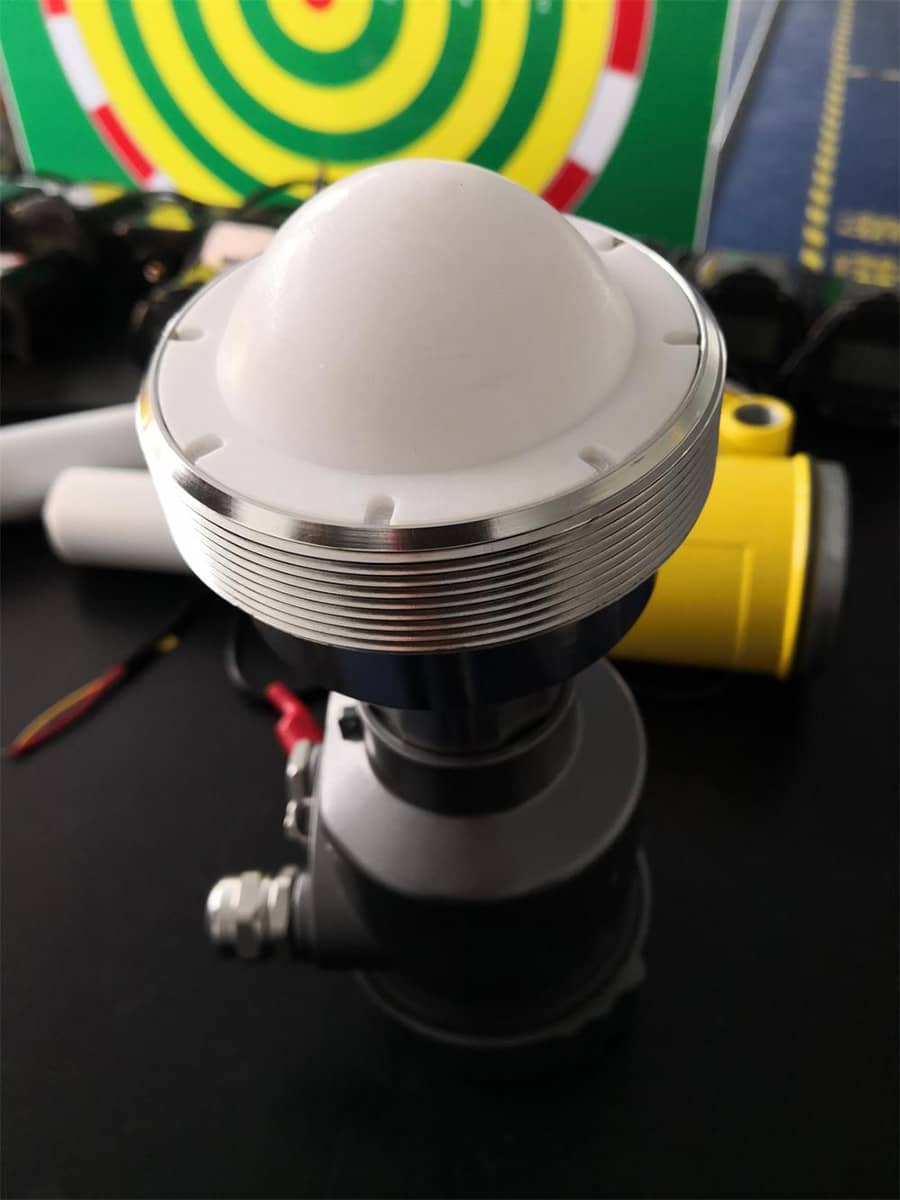
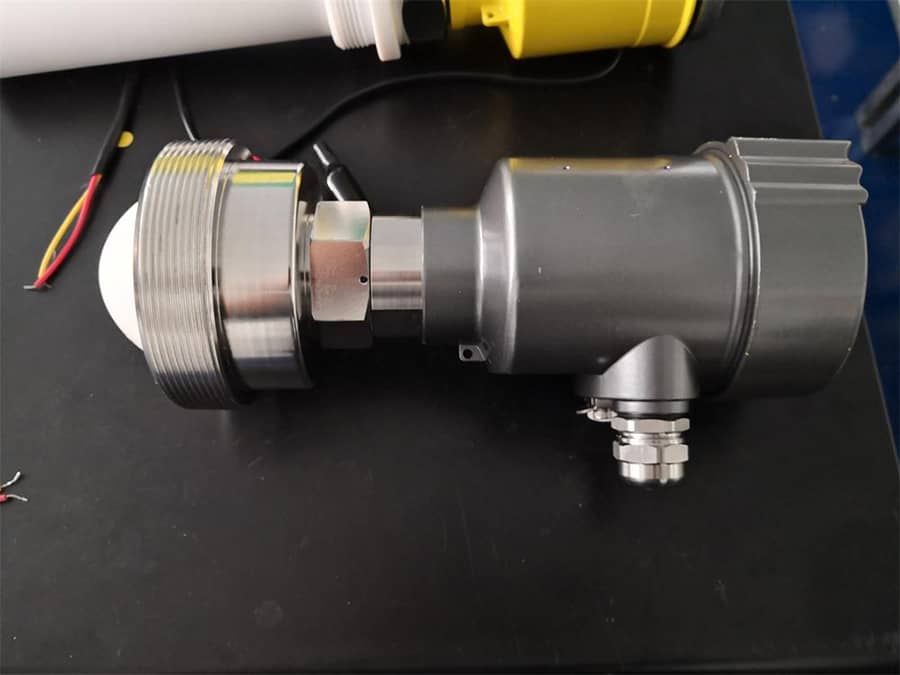
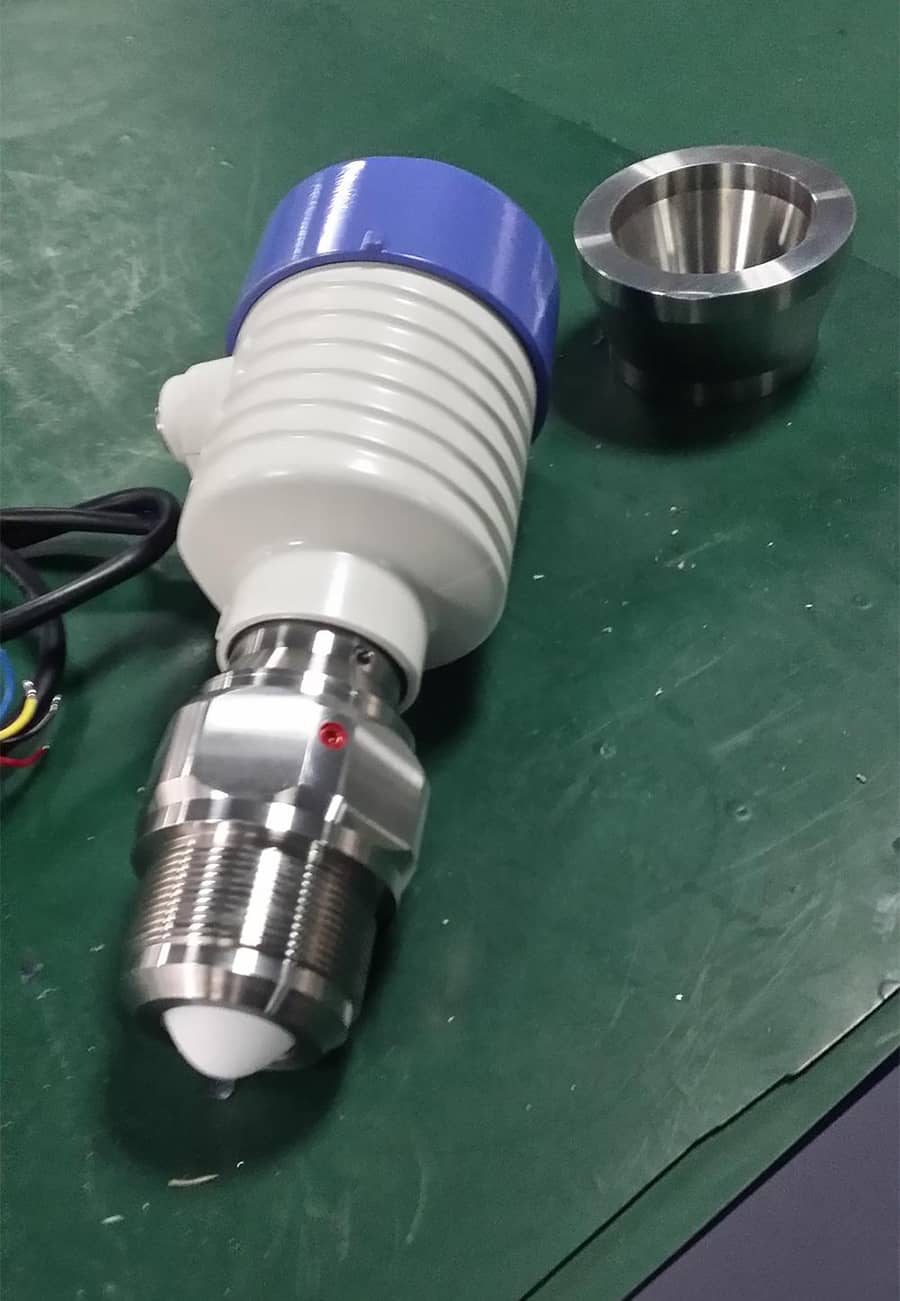
Photos of the 120GHz FM continuous wave radar level meter
Related Products
Product Inquiry
Please leave your information, and we will contact you as soon as possible after receiving it. Thank you for your support!