简体中文
简体中文 English

Products
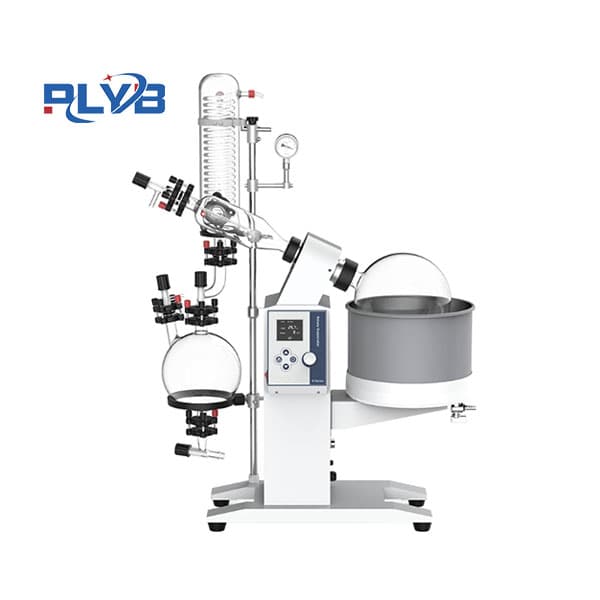
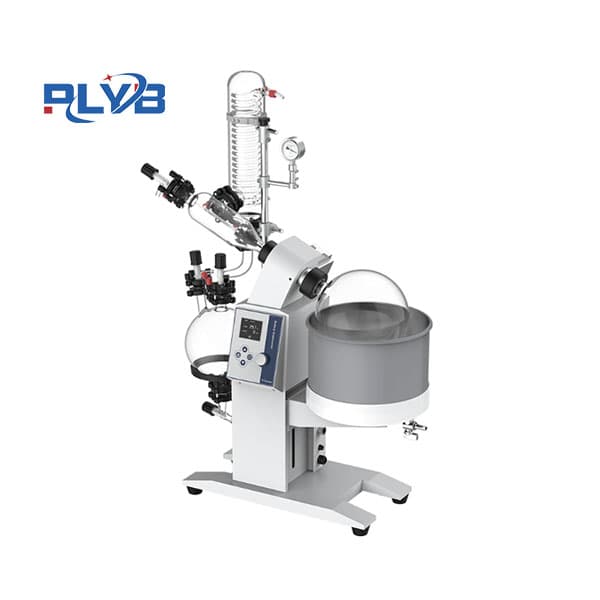
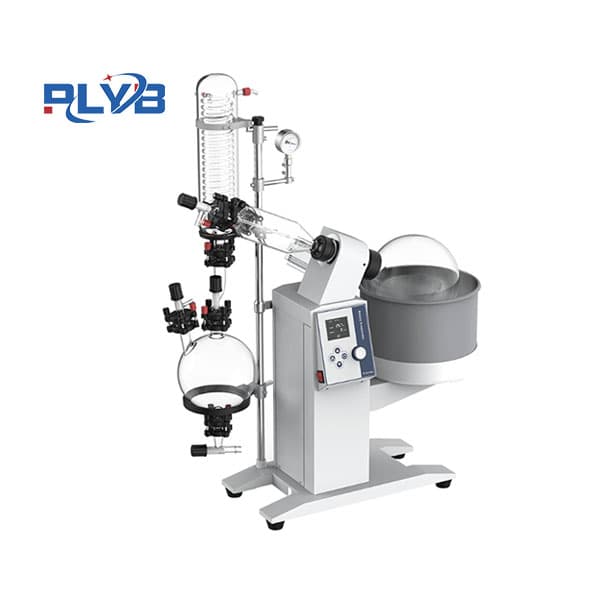
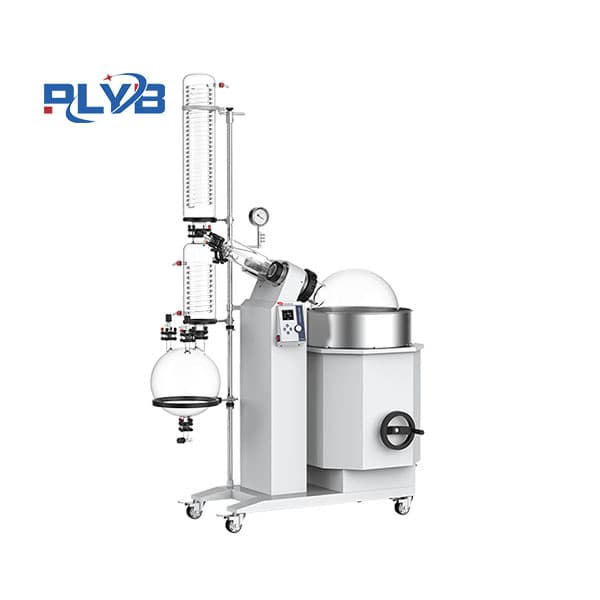
PLRE-20L Rotary Evaporator
- Product Description
-
Introduction and Features of the PLRE-20L Rotary Evaporator
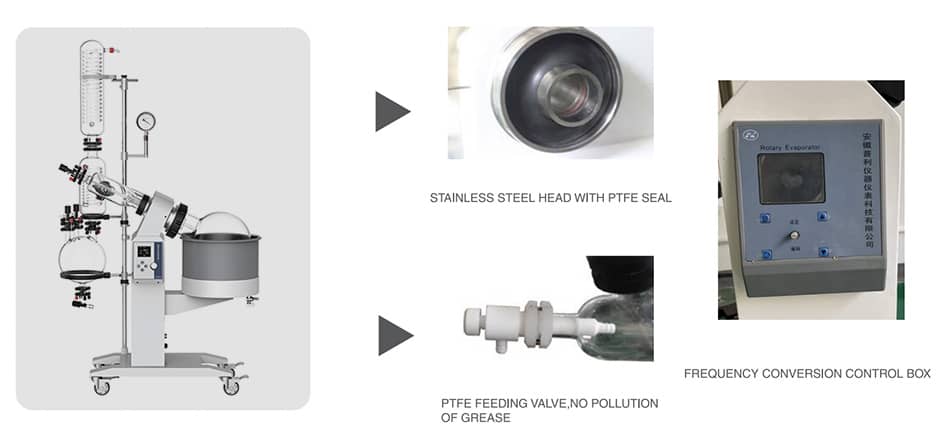
The rotary evaporator operates by rotating a glass flask containing the material while maintaining uniform, constant heating. Under negative pressure, the boiling point of the material is lowered, allowing the liquid to form a thin film and evaporate, after which it is condensed via a glass coil condenser.
It collects the solvent in a receiving flask, making it particularly suitable for concentrating, crystallizing, separating, and recovering solvents from heat-sensitive materials.
※ Equipped with a custom explosion-proof design; both the motor and control components are explosion-proof electrical devices, making it ideal for use in hazardous environments.
※ Utilizes advanced variable-frequency drive and electronic speed control to ensure stable motor operation and enhance evaporation and recovery efficiency.
※ The distillation pot is equipped with a control box, electric lifting, and vacuum feeding, reducing breakage of the rotary flask. During low-boiling-point evaporation, the collection flask can be immersed in an ice bath to minimize secondary evaporation.
※ The receiving flask features a ground-glass joint for easy assembly and disassembly, providing excellent sealing performance.
※ High‑temperature‑ and corrosion‑resistant long‑life precision seals ensure airtightness under conditions of high temperature, strong negative pressure, and severe corrosion during dynamic sealing.
※ Equipped with an AC induction explosion-proof motor that offers stepless speed regulation, is brushless, produces no sparks, and can operate efficiently over extended periods.
※ The chassis, bath tank, main rod, and machine shaft are made of high-quality stainless steel, offering an attractive appearance and excellent corrosion resistance.
※ Intelligent temperature control; compatible with both water and oil baths, offering broader applications. Temperature fluctuations are limited to ±0.2℃, ensuring more stable evaporation and reducing the risk of bumping.
※ The entire machine features a modular, standardized design, providing strong scalability, easy installation, and convenient maintenance.
Technical Specifications of the Rotary Evaporator
Product Model
Product Model
PLRE-5
PLRE-10
PLRE-20
PLRE-50
Evaporation Flask (L)
Evaporation Flask (L)
5L/50#
10L/95#
20L/95#
50L/125#
Collection Bottle (L)
Receiving Flask
2L/3L
5L
10L+5L
10L+10L
Motor Power (W)
Motor Power
90
120
120
180
Bath Power (KW)
Bath Power
2
3
5
5
Vacuum Degree (Mpa)
Vacuum Degree
0.096
0.096
0.096
0.096
Rotation Speed (rpm)
Rotation Speed
10-90
5-110
5-110
8505-110
Evaporation Rate
H₂O (L/h)
Evaporation Speed
2
3.5
5
8
Power Supply
Power (V)
220
220
220
220
External Dimensions (cm)
Dimension
55*35*110 100*50*180 110*70*200 120*80*220 Operating Instructions
(I) Operating Procedure
1. Vacuuming: Maintain the vacuum level required by the process; the higher the vacuum, the faster the evaporation rate. A vacuum switch is connected in series with the external vacuum line, and fine adjustments can be made to improve the recovery rate.
2. Feeding: Attach a flexible hose (compatible with the solvent) to the feed tube and connect it to the feed container. Utilizing the system’s negative pressure, the material can be continuously drawn into the rotary evaporator flask. The fill level should generally not exceed half capacity.
3. Connect the cooling water:
(a) Tap water circulation may be used.
(b) Use chilled water circulation. The lower the water temperature, the better the effect.
4. Connect the water bath power supply:
(The green indicator light will illuminate.) Adjust the temperature control knob to set the desired temperature (the red light will illuminate during heating). For precise water temperature, use a thermometer to measure directly; the temperature control range is 0–99°C. (Please refer to the accompanying instrument manual for instructions.)
5. Water bath height:
(a) Typically, immerse the rotary flask to about 1/3 to 1/2 of its height.
(b) The water bath height should balance the weight of the rotary flask by buoyancy; when loading or unloading the flask, the optimal water level is flush with the flask’s interior, making handling very easy.
6. Rotation: Turn on the power switch in the electrical control box, and adjust the knob from slow to fast. The optimal speed should avoid resonance vibrations of the water bath.
7. Recovering the solvent: Turn off the vacuum pump, open the feed valve to vent the system, and then open the discharge piston to release the solution from the collection flask.
8. After completing work, disconnect the power switch of the water bath and shut off the water supply.
Precautions:
1. Regarding vacuum level:
Vacuum level is the most critical process parameter for a rotary evaporator, yet users often encounter difficulties in achieving the desired vacuum. This issue is frequently related to the properties of the solvent being used. Industries such as biopharmaceuticals commonly employ solvents like water, ethanol, ethyl acetate, diethyl ether, petroleum ether, chloroform, and toluene. However, the seals in standard vacuum pumps are typically not resistant to strong organic solvents such as acetone. When working with these aggressive solvents, users should take appropriate measures to prevent or minimize direct ingress of solvent vapors into the vacuum pump, or opt for specialized vacuum pumps that can withstand highly corrosive conditions, such as water‑circulation pumps.
A simple method to check for air leaks in the instrument—clamp the external vacuum hose and observe whether the vacuum gauge on the instrument remains stable for five minutes. If there is a leak, inspect the sealing joints and the sealing rings on the rotating shafts to ensure they are functioning properly (see Maintenance). Otherwise, if the instrument operates normally, proceed to check the vacuum pump and vacuum piping.
2. Regarding motor temperature rise:
The motor of this instrument uses Class E insulation, with windings made from high-strength polyester‑enameled wire. The recommended operating environment is an altitude not exceeding 1,000 meters and an ambient temperature not exceeding 40°C. A continuous surface temperature rise of no more than 45°C (the difference between the motor’s surface temperature and the ambient temperature) is considered normal and safe for use. If the temperature rise exceeds 45°C, the related transmission and lubrication systems should be inspected.
Related Products
Product Inquiry
Please leave your information, and we will contact you as soon as possible after receiving it. Thank you for your support!