简体中文
简体中文 English

Products
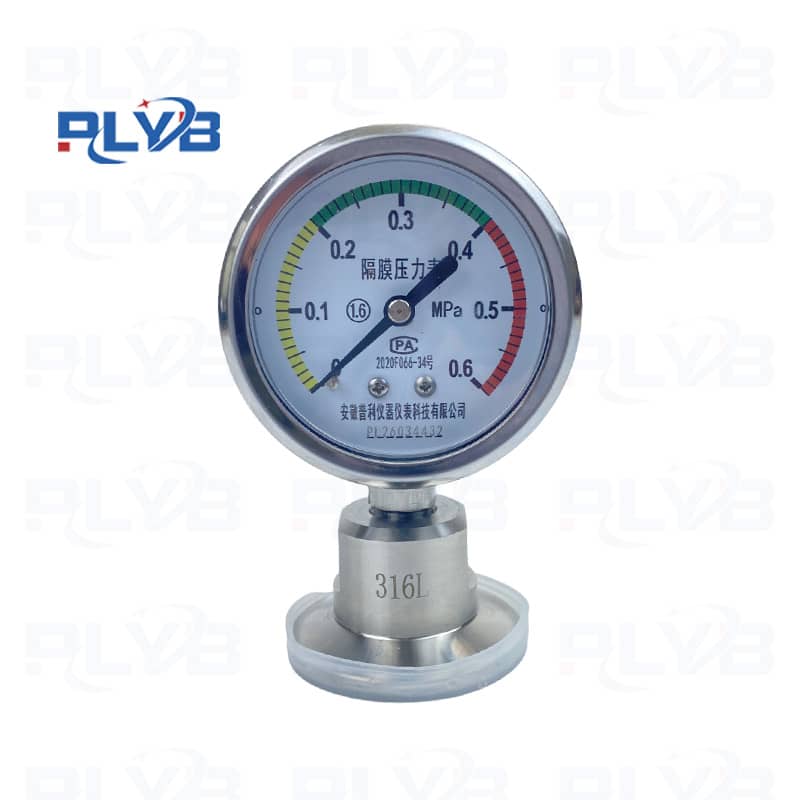
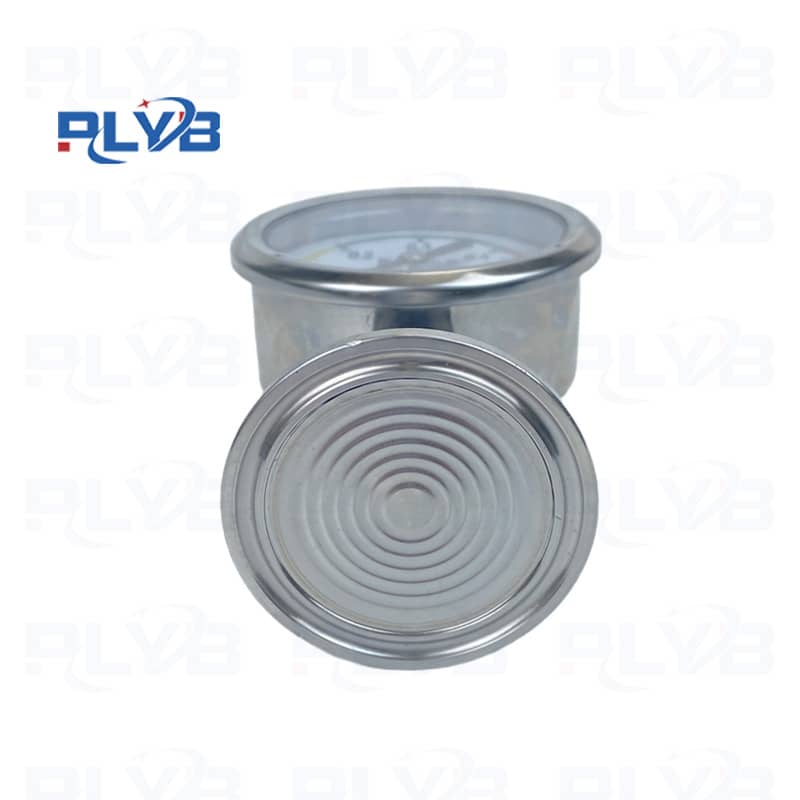
Stainless Steel Clamp Diaphragm Pressure Gauge (Sanitary Grade)
- Product Description
-
In the food, pharmaceutical, bioengineering, and fine chemicals industries, the cleanliness, hygiene, and corrosion resistance of pipelines and equipment are critical. Traditional threaded or flanged pressure gauges are prone to dead corners, difficult to clean, and cannot meet strict hygiene standards. Stainless steel diaphragm pressure gauge (clamp installation) combines diaphragm sealing technology with clip-type quick-connect method to achieve sterile, no-blind spots, and easy-to-disassemble and clean precise pressure measurement, making it the preferred instrument for sanitary-grade operating conditions.
What is a stainless steel diaphragm pressure gauge with clamp installation?
The stainless steel diaphragm pressure gauge uses a diaphragm isolator to separate the measured medium from the sensitive components of the pressure gauge. The gauge head is made entirely of stainless steel, and the diaphragm body is connected to the pipeline or container via clamps (quick-release connectors). Clamp installation complies with hygiene standards such as ISO, DIN, and 3A, allowing quick assembly and disassembly, facilitating on-site cleaning (CIP) and steam sterilization (SIP). The diaphragm body is usually made of 316L stainless steel, and can be coated with PTFE or made from corrosion-resistant materials such as Hastelloy.
Core Features and Advantages
Sanitary-grade clamp connection: no thread dead corners, smooth inner wall easy to clean, compliant with GMP/FDA certification requirements, suitable for clean environments such as food, pharmaceuticals, and bioreactors.
Corrosion and High Temperature Resistance: Made entirely of stainless steel 316L material, combined with high-temperature resistant separator fillers (such as silicone oil and edible oil), it can withstand steam sterilization above 150°C.
Diaphragm sealed isolation: The measured medium does not enter the pressure gauge spring tube, preventing clogging or damage to the instrument from high-viscosity, easily crystallized, or highly corrosive media.
Precise and stable measurement: Paired with alloy diaphragms, measurement accuracy can reach 1.5 or 1.0 grades, with a wide range (-0.1MPa ~ 60MPa).
Vibration and pulse resistance: The separator filler itself has damping properties, and an optional oil-filled shock-resistant dial enhances impact resistance.
Multiple diaphragm materials: Standard 316L; Special media such as Hastelloy C276, Monel, tantalum, PTFE coatings, etc.
Main technical parameters
Parameter items Specifications Dial diameter Φ63mm / Φ100mm / Φ150mm all-stainless steel pressure gauge (radial or axial) Accuracy grade Level 1.5 (standard), Level 1.0 (optional) Diaphragm body material 316L stainless steel (liquid contact section), optional Hastelloy alloy, tantalum, PTFE coatings Diaphragm material 316L / Hastelloy C276 / Monel / Tantalum (selected based on corrosiveness of the medium) Clamp specifications 1.5-inch (Φ50.5mm) standard, with 1-inch, 2-inch, and non-standard DN25-DN50 customizations available Sealing ring material EPDM (standard), FKM (fluoroadhesive), PTFE, silicone rubber (food grade) Watch head protection rating IP65 / Oil-filled models can reach IP66 Filling liquid Silicone oil (-40~150°C), edible oil (food grade), fluorine oil (strong oxidizing medium) Maximum working pressure Membrane specifications typically ≤ 25MPa, with special customizations Ambient/medium temperature -40°C ~ +250°C (requires appropriate filler and radiator selection) Typical application scenarios
Food and beverage production: milk pipelines, beer fermentation tanks, juice homogenizers, CIP cleaning systems
Pharmaceuticals and bioengineering: sterile reactors, fermentation tanks, liquid preparation systems, water pipelines for injection
Fine chemicals and coatings: production lines for high-viscosity adhesives, resins, paints, and dyes
Water treatment and environmental protection: dosing devices, membrane treatment equipment (leakage-free required)
Cell culture and laboratory: single-use bioreactors, small sterile tanks
Why choose a diaphragm pressure gauge with clamp installation?
Compared to traditional threaded or flange pressure gauges, clamp installation offers the following outstanding advantages:
No Dead Corner Design: The inner diameter of the clamp connection matches the pipeline, preventing material accumulation in the recessed threaded connection and stopping bacterial growth.
Quick disassembly: No tools or just a clamp wrench are needed to remove the pressure gauge for calibration or replacement within seconds, greatly reducing downtime for cleaning.
Standardized interface: Complies with 3A hygiene standards and ISO 2852 standards, allowing seamless integration with other hygiene-grade valves and fittings.
Safe and reliable: clamps combined with silicone gaskets form a tight seal with no risk of leakage, especially suitable for high-pressure steam or corrosive media.
Selection and precautions
Determine the interface dimensions: Measure the pipe chuck specifications (e.g., Φ50.5mm corresponds to 1.5 inches) to ensure the diaphragm body interface matches.
Selection of separator material and coating: 316L is sufficient for acidic media; Hastelloy alloy for halogens and strong oxidizers; For highly viscous and easily crystallizing media, it is recommended to add PTFE anti-stick films.
Filler selection: Silicone oil or edible oil for ordinary food/pharmaceutical use; High-temperature sterilization (>150°C) requires high-temperature silicone oil and an added heat sink; Strong oxidizing media (chlorine, oxygen) require fluorine oil and degreasing treatment.
Range setting: Due to additional errors in the separator itself, it is recommended to keep the working pressure between 30%~70% of the range to avoid overpressure damage to the diaphragm sheet.
Installation direction: Clamp-type diaphragm pressure gauges are usually installed vertically; the diaphragm body should be thoroughly flushed before connection; If measuring viscous media, the separator surface can be installed facing up to prevent sedimentation.
Frequently Asked Questions (FAQ)
Q: Can clamp diaphragm pressure gauges measure gases?
Answer: Yes, you can. However, it should be noted that if the gas medium contains moisture or impurities, it may still block the capillaries above the separator; It is recommended to choose a large flat diaphragm or a structure with a rinse interface.Q: How is a septum ruptured detected?
Answer: You can choose a pressure gauge with diaphragm rupture indication (dual pointer or alarm contact), or regularly use a leak detector for detection; You can also judge by observing whether the filler inside the watch head has emulsified or changed color.Q: Can clamp pressure gauges be used for vacuum measurement?
Answer: Yes, but a fully welded separator body must be selected, and the filler solution must not vaporize under vacuum. It is recommended to use low-temperature, low-volatility silicone oil, which should include a vacuum negative pressure range (e.g., -0.1MPa).Q: How do you clean and disinfect it?
Answer: CIP (In-Line Cleaning) and SIP (In-Line Steam Sterilization) can be performed directly, with sterilization temperatures not exceeding the tolerance limit of the filler solution. It is recommended to steam ≤ 140°C for ≤ 30 minutes to prevent deformation of the diaphragm sheet.
Related Products
Product Inquiry
Please leave your information, and we will contact you as soon as possible after receiving it. Thank you for your support!