简体中文
简体中文 English

Products
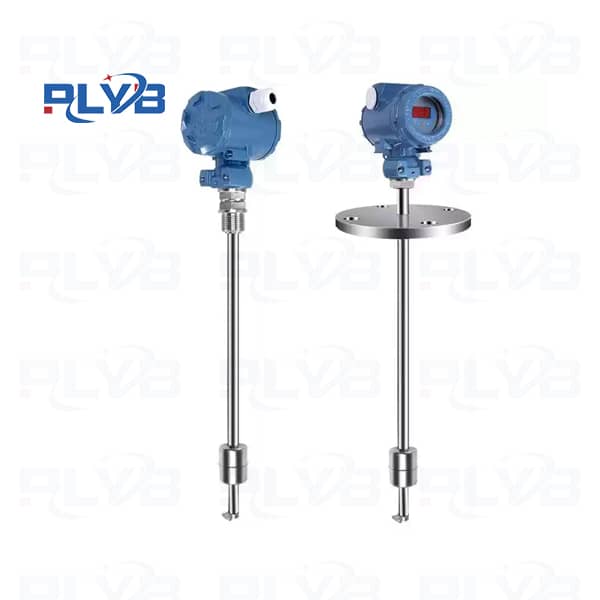
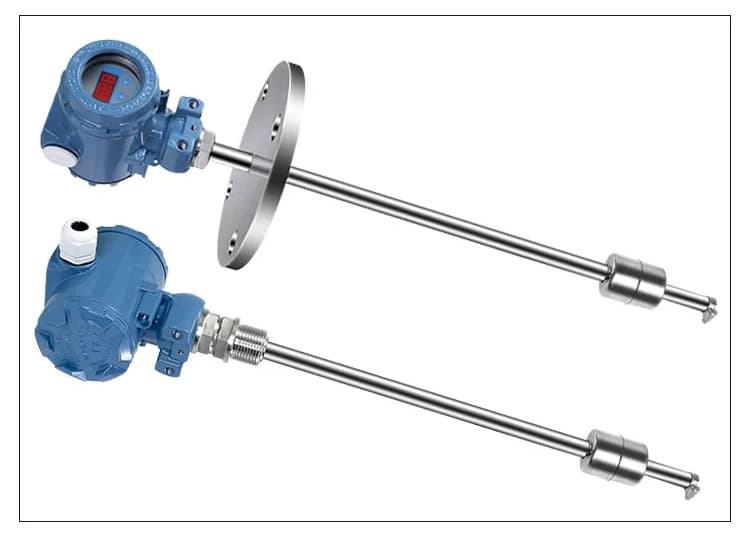
Float level transmitter / float level meter
- Product Description
-
Core product positioning
A float level transmitter (also known as a float level meter) is a continuous liquid level measuring instrument based on the principle of buoyancy, using magnetic coupling or electromechanical conversion to convert the vertical displacement of the float ball with the liquid surface into a standard electrical signal. It mainly consists of a guiding measuring rod, float, conversion module, and housing, featuring a simple mechanical structure, flexible range selection, strong pollution resistance, maintenance-free operation, and high cost performance. The product is widely used for remote level transmission and local display of liquid levels in atmospheric and low-pressure containers, making it an ideal choice for storage and transportation processes in industries such as water treatment, petroleum, chemical, and food.
Product images

Product Overview
This series of float level transmitters uses a high-performance reed resistor chain array as the core sensing element (optional high-precision magnetostriction model), paired with stainless steel or engineering plastic floats and a built-in transmission module. It can directly output 4~20mA signals that are well linear with the measured liquid level, and can be combined with HART communication or optionally RS485 output. The product offers two basic installation types: top-mounted (immersion) and side-mounted (connected tube type), covering a measurement range from 0.2m to 6m. The material combinations are flexible, meeting the requirements for continuous liquid level monitoring of pure water, sewage, light oil, weak acidity and alkalis, and moderately corrosive media, and possessing intrinsic safety or explosion-proof capabilities.
Core performance parameters
Measurement range: 200mm~6000mm (customized)
Output signal: 4~20mA DC (can be stacked with HART, RS485/Modbus)
Accuracy grade: 0.5% FS / 1.0% FS (magnetostrictive type can reach 0.1% FS)
Resolution: 5mm / 10mm
Power supply: 24V DC (12~36V DC)
Load resistance: ≤750Ω (at 24V)
Medium temperature: -20°C~120°C (high-temperature models can reach 200°C)
Working pressure: atmospheric pressure ~2.5MPa (depending on float and process connection strength)
Liquid Connection Material:
Guide rods/connectors: 304 / 316L stainless steel, polypropylene PP, polyvinylidene fluoride PVDF
Float: 304/316L stainless steel, titanium alloy, PP, PTFE coating
Sealing rings: fluororubber, PTFE
Process connections: flanges (DN50/DN80, etc.), threads (G2", etc.), sanitary chucks
Electrical connection: M20×1.5 waterproof cable connector
Protection level: IP65 / IP67
Explosion-proof rating: Ex db IIC T6 Gb
Local display: Optional LCD/LED digital meter to show percentage or liquid level values
Structural principle
The core of the float level transmitter is a sealed measuring rod with tightly arranged reed tubes and a precision resistance chain. The outer sliding sleeve of the rod contains a float containing a ring-shaped magnet. When the liquid level changes, the float moves up and down along the measuring rod. The magnetic field of the magnet inside the float causes the reed tube at the corresponding position to pull together, thereby connecting resistors of different resistance values. The measuring rod as a whole outputs a resistance value strictly proportional to the liquid level. The transmission module linearly converts this resistor signal into a standard current output of 4-20mA.
Another high-precision solution uses magnetostriction: the float is fixed with a ferrite ring inside, the measuring rod is equipped with a magnetostrictive waveguide, and the electronic components send inquiry pulses and detect the time difference of the returned torsional wave, directly determining the float's exact position with micron-level accuracy. However, in general industrial scenarios, reed tube resistor chain-type float level transmitters are widely used due to their dirt resistance, material slag resistance, and the need for no complex calibration. This page mainly introduces such products and offers magnetostrictive customization.
Product advantages
Simple and reliable structure, long service life.
No mechanical transmission or precision friction components; the float only contacts the medium and guide rod. The reed tube is fully sealed inside stainless steel or plastic rods, unaffected by environmental dust and humidity, resulting in an extremely long mean time between failures.Strong adaptability to media: The
float can provide sufficient buoyancy, and even with liquid density as low as 0.6g/cm³, enlarged float designs can still be used. It can tolerate a certain degree of material slag, suspended particles, and foam, and does not produce false signals. By selecting floats and rods coated with PP, PVDF, or PTFE, it is possible to measure acid, base, and salt solutions over the long term.Flexible range customization, no dead zones. The
measurement length can be freely customized according to the actual tank depth, ranging from 0.2 meters to 6 meters or even longer. The dead zone is extremely small, covering the entire area near the tank bottom and top.Easy installation and maintenance:
Top-mounted flange type can be inserted directly through the opening at the tank top; Side-mounted installation uses the tank's external bypass pipe, allowing maintenance without the need for tank cleaning. When replacing the float or cleaning the measuring rod, simply pull it out from the connecting flange, making the process simple and fast.High cost-performance ratio:
Compared with radar and magnetic flap remote transmission solutions, float level transmitters significantly reduce procurement and installation costs while meeting medium accuracy requirements, making them especially suitable for large-scale deployment of multi-tank units.Multiple output and explosion-proof options.
Standard 4-20mA output can be directly connected to the PLC. Adding the HART protocol enables intelligent configuration and diagnostics. It also provides intrinsically safe and explosion-proof explosion-proof structures, making it safe for use in hazardous areas such as oil storage areas and chemical tank areas.
Model selection guide
To accurately match the float level transmitter model, please provide the following parameters:
Name of the measured medium, density, viscosity, corrosiveness
Operating temperature and pressure (normal temperature, normal pressure, or pressurized high temperature)
Measurement range (i.e., the distance from the flange mounting surface to the minimum and maximum liquid levels required to be measured)
Tank installation method: tank top mounting with openings or side wall connecting pipes
Check if there are stirring, fluctuating, or flow slowing devices inside the tank
Process connection specifications (flange standards, nominal diameter, and pressure rating, or thread dimensions)
Material requirements (304, 316L or anti-corrosion PP, etc.)
Output signal types (4-20mA, HART, RS485)
Whether on-site display, explosion-proof requirements, and protection levels are required
Typical application scenarios
Water Treatment and Environmental Protection
Clean water tanks, sewage pools, collection wells, dosing tanks—anti-fouling and clogged, suitable for outdoor humid environments.Petroleum and Chemical:
Oil-water separators, light oil storage tanks, underground waste liquid pools—explosion-proof design ensures safety.Boilers and HVAC
condensate tanks, expansion tanks, soft tanks—high-temperature type continuously monitors water level.Food and beverage
ingredient tanks, milk storage tanks, cleaning water tanks—hygienic floats and rods meet food-grade requirements.Agriculture and irrigation
: Irrigation water storage tanks and liquid fertilizer mixing tanks—low cost, long lifespan, and no need for frequent replacement.Ships and Oceans:
Ballast tanks, sewage tanks—side installation in small spaces, resistant to rocking and vibration.
Installation and maintenance precautions
Installation direction and verticality: During
top installation, the measuring rod must remain vertical, allowing an inclination angle of ≤3° to prevent the float ball from jamming. If the guide rod is too long, a fixing ring or counterweight should be installed at the bottom to prevent swinging.Away from the inlet and outlet points. The
installation position should avoid areas directly impacted by liquids to prevent false fluctuations caused by turbulence interference on the float ball. Protective sleeves may be added if necessary.Requirements for side-mounted connecting pipes: For
side-mounted connections, the upper and lower openings of the bypass pipe must be positioned outside the lowest and highest liquid levels, respectively. The inner diameter of the connecting pipe should be large enough to ensure the float ball floats freely and is not caught on the wall.Float Assembly: When
installing floats, pay attention to the direction (some floats have upper and lower sections), and leave an appropriate gap between the float and the guide rod. Do not use sharp objects to pierce the surface of the float to avoid seal failure and corrosion.Electrical wiring:
Always use shielded cables, with the shielding layer reliably grounded at one end of the control room. After wiring is completed, all cable sealing joints must be tightened to ensure the IP protection level.Anti-blocking and cleaning:
If measuring viscous or easily crystallizing media, periodically remove the transmitter and wipe the measuring rod and float with solvent. If an optional rinsing interface is provided, online cleaning can be achieved.Prevent magnetization interference: The
installation area should be kept away from strong magnetic fields and large amounts of ferromagnetic materials to avoid interfering with the normal operation of the magnet and reed tube inside the float.
Service and Guarantee
Professional Selection Support: The technical team calculates float ball dimensions, material matching, and explosion-proof selection, with feedback within 24 hours
Factory full inspection: Each product is provided with test reports on pressure resistance, insulation, accuracy, and number of movements
Worry-free warranty: 12-month warranty under normal use, lifetime maintenance
Ample inventory: Transmitters with common ranges and materials are always in stock of semi-finished and finished products, with same-day shipping as fast as the same day
On-site service: Installation guidance and fault diagnosis on-site services are available in key regions nationwide
Related Products
Product Inquiry
Please leave your information, and we will contact you as soon as possible after receiving it. Thank you for your support!