简体中文
简体中文 English

Products
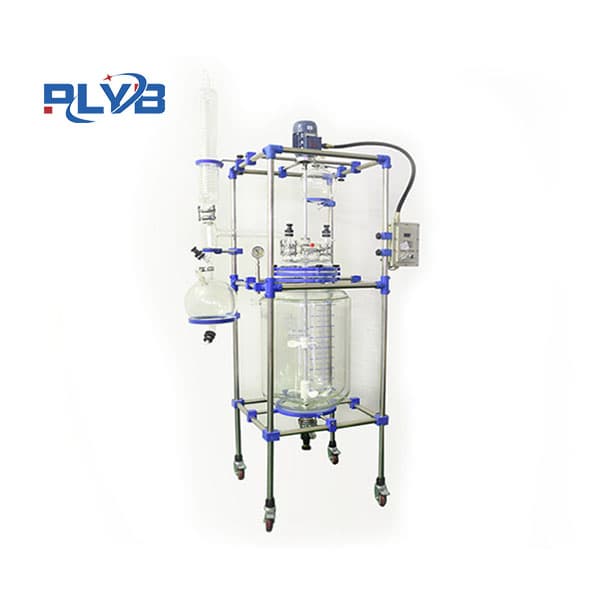
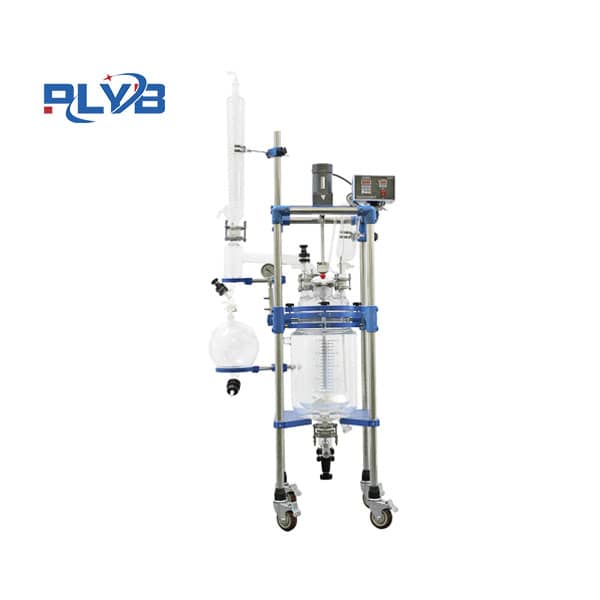
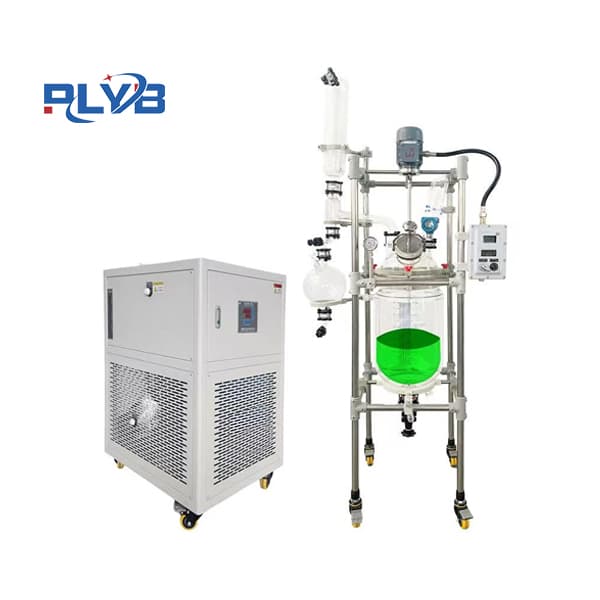
PL-20L Double-Jacket Glass Reactor
- Product Description
-
PL-20L Double-Jacket Glass Reactor
In the industrialization of pharmaceuticals, chemical engineering, biosynthesis, and new material production, scaling up equipment capacity often brings with it risks and challenges associated with process scale-up. The 20L double-jacketed glass reactor, serving as a “golden bridge” between laboratory-scale trials and industrial production, is becoming an indispensable core piece of equipment in pilot plants and batch-production stages, thanks to its increased throughput, stable temperature-control system, and highly realistic industrial‑scale design.
20L Specification: Why Is It the Ideal Starting Point for Pilot-Scale Scale-Up?
As R&D projects transition from small-scale experiments (5 L–10 L) to scaled-up production, the 20 L double‑jacketed glass reactor perfectly fills the gap in “scale‑up validation.” Compared with the 10 L double‑jacketed glass reactor, the doubled volume of the 20 L unit significantly increases single‑batch throughput, meeting pilot‑scale requirements for materials ranging from kilogram to ten‑kilogram quantities. It not only retains the intuitive visual advantages of glass equipment but also incorporates industrial‑grade adaptations in stirring torque, sealing and pressure resistance, and heat‑transfer efficiency, providing precise process parameters that pave the way for the subsequent commissioning of hundred‑liter stainless‑steel reactors.
Core Advantages: Dual Assurance of Efficient Heat Transfer and Structural Stability
20L double-layer glass reactors are typically manufactured using thickened 3.3 high-borosilicate glass. Compared with smaller‑size equipment, their wall thickness and flange structure have been specially reinforced to withstand the mechanical stresses associated with larger batch volumes.
Enhanced heat transfer capability: The jacket volume of the reactor vessel has been increased, allowing for the introduction of high‑temperature heat transfer oil (up to 250°C) or low‑temperature cooling fluid (down to -80°C). Thanks to an optimized jacket flow‑guiding design, the circulation of hot and cold media within the jacket is more uniform, eliminating the “localized overheating” that can occur due to the increased volume and ensuring uniform temperature distribution throughout the reactor contents.
High-vacuum sealing performance: The 20L model has even stricter vacuum requirements. High-quality equipment employs double mechanical seals or magnetic coupling sealing technology, capable of maintaining a vacuum level above -0.098 MPa for extended periods, effectively meeting the demands of long-term, high-load reduced-pressure distillation or anhydrous, anaerobic reactions during pilot-scale operations, thereby preventing material loss due to seal failure.
Industrial-grade structural design: Addressing complex process challenges
Compared with small-scale equipment, the 20L double-jacketed glass reactor places greater emphasis on long-term operational stability and ease of use in its structural design:
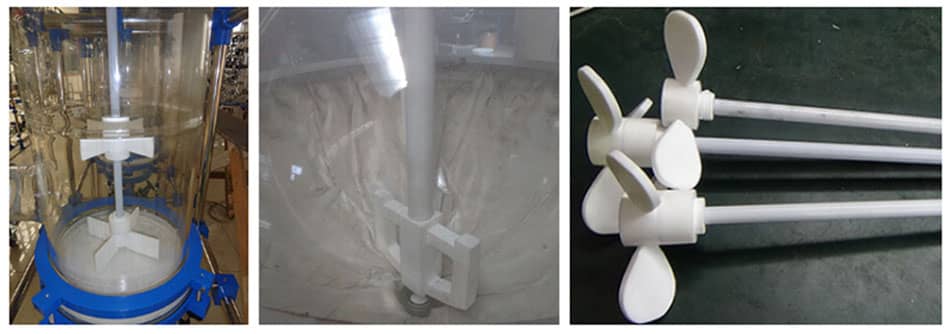
High‑torque stirring system: Equipped with a high‑power explosion‑proof variable‑frequency motor, delivering significantly higher stirring torque than smaller‑sized equipment. The stirrer features a combined impeller‑anchor design, capable of handling high‑speed mixing of low‑viscosity liquids while ensuring vigorous bottom‑to‑bottom circulation with no dead zones when processing high‑viscosity materials or solid–liquid suspension systems.
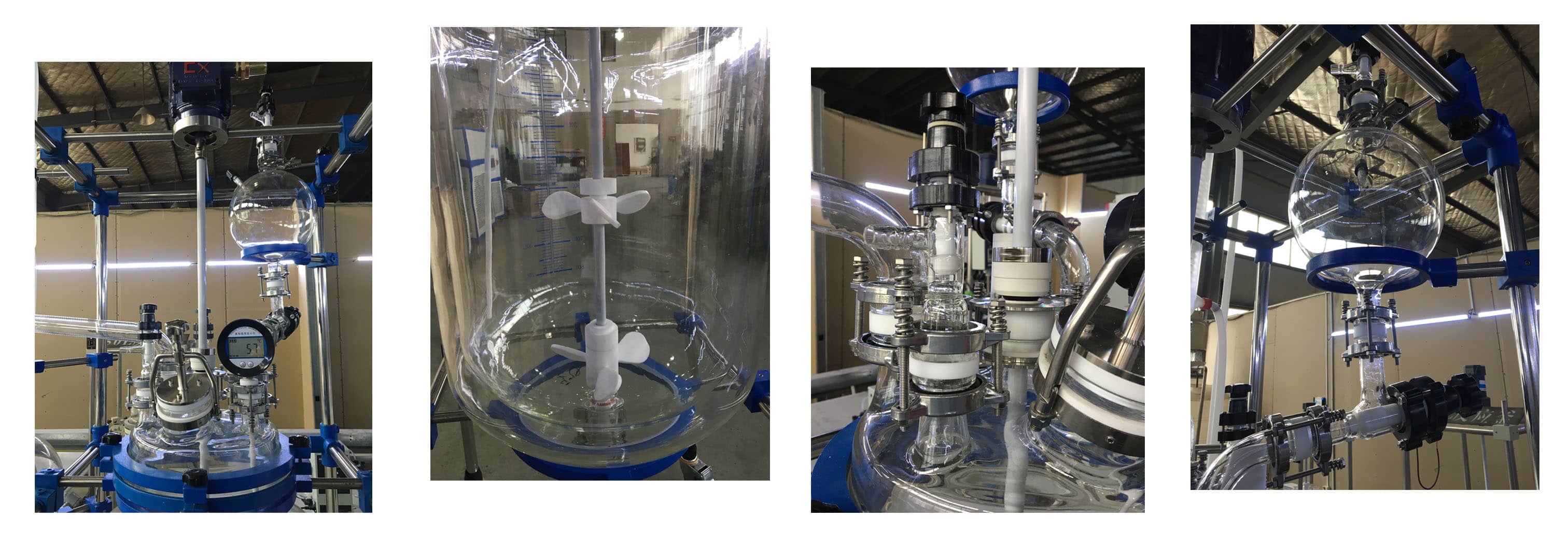
Multi‑functional expansion interfaces: The reactor lid is equipped with 5–8 standard ground‑glass joints. In addition to meeting basic requirements such as constant‑pressure dropwise addition, temperature monitoring, and condensation reflux, it can also be expanded with auxiliary devices like online pH monitoring, turbidity detection, or solid feed hoppers, satisfying the complex online monitoring and control needs of pilot‑scale processes.
Core application scenarios:
From process optimization to small-batch production, the 20L double-layer glass reactor plays an irreplaceable role in the following scenarios:
Pharmaceutical Industry: Pilot-Scale Scale-Up of Active Pharmaceutical Ingredients (APIs)
In the drug registration and clinical trial sample preparation stages, a 20L reactor can be used to validate the synthesis process of critical intermediates, ensuring that the impurity profile and yield remain compliant with quality standards even after scale-up.
Fine Chemicals: Catalyst and Additive Production
It is suitable for exothermic reactions that require strict temperature control, such as polymerization and emulsification. Its excellent heat dissipation efficiency effectively mitigates the risks associated with reaction heat, ensuring operational safety.
New Material Synthesis: Organosilicon Compounds and Specialty Resins
When handling high-viscosity, easily crystallizing special materials, the 20L equipment, with its powerful stirring output and jacketed temperature control capabilities, can simulate industrial production conditions, providing a reliable basis for mass production.
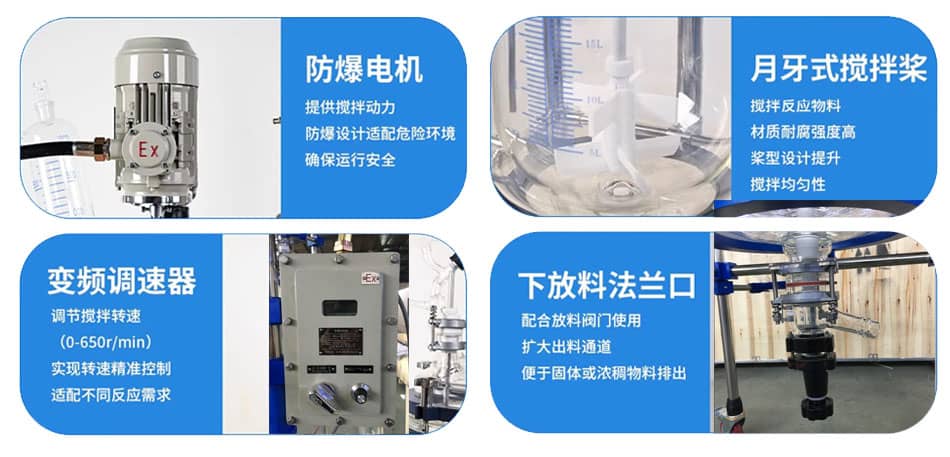
Detailed images of each component of the double-layer glass reactor
Includes explosion-proof motors, various types of impellers, variable-frequency controllers, PTFE discharge valves, thermometers, serpentine condensers, and more
Parameter Table for 10L and 20L Double-Jacketed Glass Reactors
Product Model
Product Model
PL-10L
PL-20L
Vessel Capacity(L)
Volume(L)
10
20
Number of Vessel Ports
Neck No. on Cover
6
6
Inner Cylinder Outer Diameter
External Diameter of Inner Vessel(mm)
230
290
Outer Cylinder Outer Diameter
External Diameter of Outer Vessel (mm)
290
330
Reactor Cover Diameter
Cover Diameter (mm)
265
265
Reactor Body Length
Vessel Height(mm)
450
550
Motor Power
Motor Power(W)
120
120
Vacuum Degree
Vacuum Degree(Mpa)
0.098
0.098
Rotational Speed
Rotation Speed(rpm)
50-1400
50-1400
Torque
Torque(Nm)
1.90
1.90
Power Supply
Power (V)
220
220
Overall Dimensions
Dimension(mm)
650*650*1900
700*500*2000
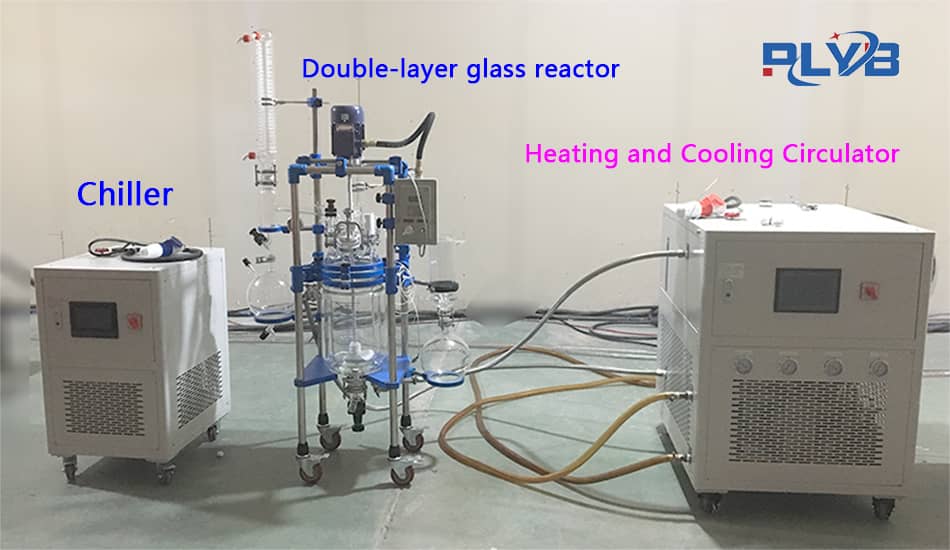
Real-World Photos of a Double-Layer Glass Reactor
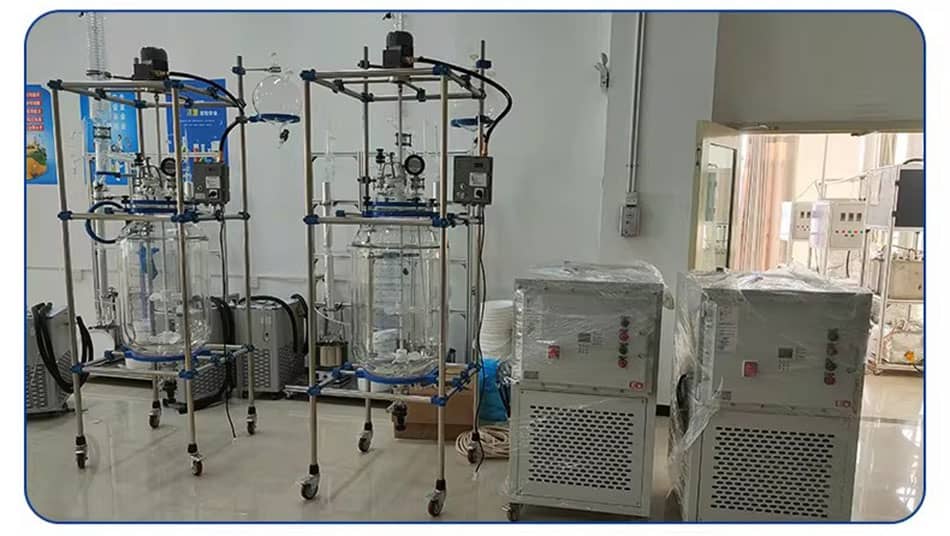
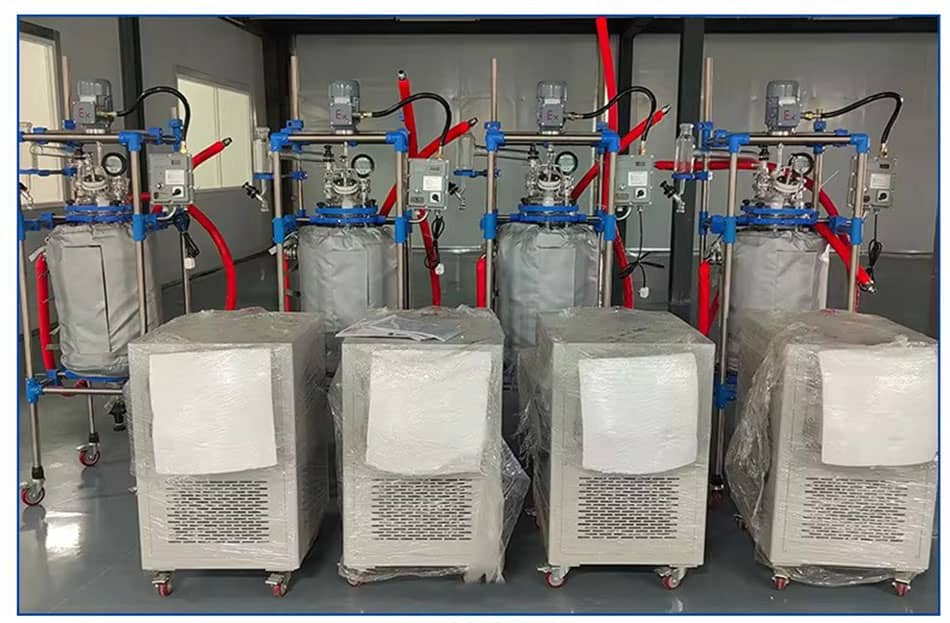
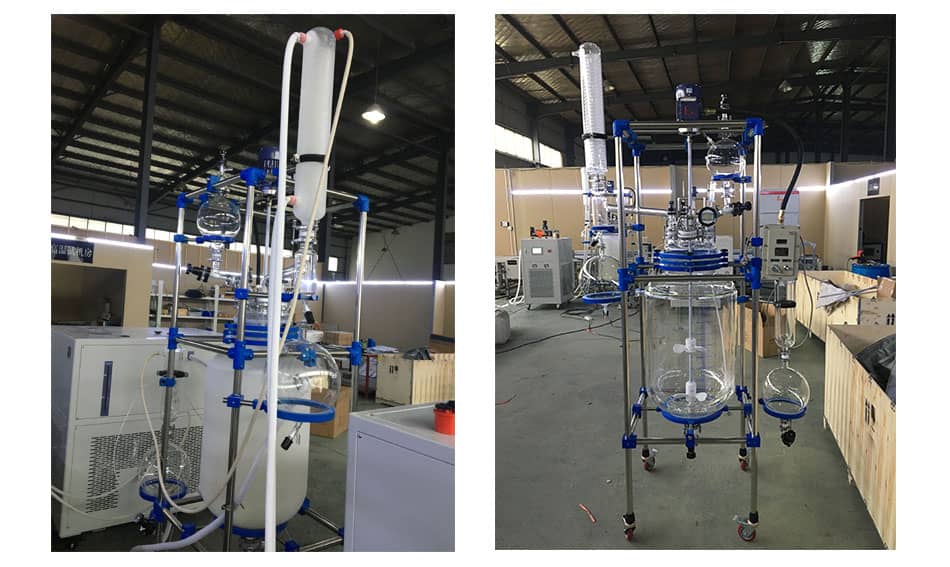
Combined use of double‑walled glass reactors, high/low temperature integrated units, and low‑temperature circulators
Key considerations for selection: the volume and characteristics of the solution being processed
When selecting a 20L double-layer glass reactor, it is recommended to focus on the following industrialization-related criteria:
Seal Durability: Inquire with the supplier about the material of the seals (it is recommended to use perfluoroelastomer or PTFE‑composite materials), and request vacuum pressure‑holding test data to ensure the equipment can sustain continuous operation for more than 48 hours.
Electrical Control Safety: Pilot‑scale environments often involve flammable and explosive solvents; motors and electrical control cabinets must meet Ex explosion‑proof standards and be equipped with variable‑frequency speed control and automatic overload‑trip protection.
Discharge Convenience: The design of the bottom discharge valve is critical. It is recommended to select a four‑fluorine discharge valve with no dead corners to prevent material residue and cross‑contamination, ensuring smooth discharge and easy cleaning and sterilization.
Daily Maintenance and Precautions for Glass Reactors
Since 20L equipment typically handles high-value materials, proper operation and maintenance are essential to ensuring process success:
Temperature Differential Control: When heating or cooling the jacket, always follow the “stepwise temperature rise/fall” principle, and ensure that the medium’s temperature difference does not exceed 60°C to prevent thermal stress damage to the glass reactor vessel.
Seal Inspection: Before each run, check the lubrication condition of the agitator shaft seal; for mechanical seals, ensure that the cooling fluid circulation is functioning properly.
Cleaning Protocol: After the reaction is complete, clean the reactor immediately. Never allow strongly alkaline materials to remain inside, as prolonged exposure can corrode the glass surface, compromising its smoothness and service life.
Conclusion
The 20L double-jacketed glass reactor is not only an experimental device with increased capacity, but also a technological safeguard that helps move your process from “feasibility” to “stable mass production.” With its moderate size, it embodies the core principles of industrial-scale manufacturing, ensuring R&D flexibility while providing a process validation platform that closely mimics large‑scale production conditions. Choosing a 20L reactor system with a well‑designed configuration, reliable sealing, and safe operation will pave the way for your project to transition smoothly from the lab to the market.
If you are looking for a glass reactor solution suitable for pilot-scale scale-up, please contact us to obtain detailed technical specifications and customized solutions, helping you efficiently bridge the gap between R&D and production.
Related Products
Product Inquiry
Please leave your information, and we will contact you as soon as possible after receiving it. Thank you for your support!